

Workshop Participants
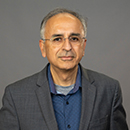
Anish Arora is Chair and Distinguished Professor of Computer Science and Engineering at The Ohio State University. He is known for his research in wireless sensor networks (WSNs), where he has led expeditions that created record-setting WSNs and redefined the boundaries of what is achievable without wired infrastructure. Ultra low-power, intelligent WSN technology developed in his group has led to innovative large-scale testbed facilities and deployments worldwide for environmental surveillance applications. As co-founder and CTO of The Samraksh Company, he has led the commercialization of radar and acoustics-based “mote”-scale products and solutions. Earlier work of his on stabilizing systems was incorporated in products and systems at major companies such as SUN and Microsoft. He is currently collaborating on the architecture and foundations of the intelligence plane in wireless edge networks in the NSF AI-EDGE Institute, of which he is a Co-Director. He is also leading workforce development of a broad set of education and training programs in 5G and Broadband Networking across Ohio through a Sector Partnership, as Faculty Director of the 5G-OH Center. Anish is a Fellow of the IEEE and a recipient of numerous conference best paper awards and the Vajra Research Fellowship.

Dr. Tara Behrend is the John Richard Butler II Professor of Human Resources and Labor Relations at Michigan State University, and director of the Workplaces and Virtual Environments Lab. She is an expert in workplace technology use in the areas of assessment, training, performance measurement, and decision-making. She serves in multiple national leadership roles, including Chair of the National Academies Board on Human-Systems Integration and Chair of the APA Board of Scientific Affairs. She is a former Program Director at the National Science Foundation with responsibility for the Science of Organizations and Future of Work at the Human-Technology Frontier programs. She has authored and edited four books: Workforce Readiness and the Future of Work; Technology and Measurement Around the Globe; Research Methods for I-O Psychology, and Human-Technology Partnerships at Work. She is a fellow and past president of the Society for Industrial-Organizational Psychology.

Dr. Tanya Berger-Wolf is a Professor of Computer Science Engineering, Electrical and Computer Engineering, and Evolution, Ecology, and Organismal Biology at the Ohio State University, where she is also the Director of the Translational Data Analytics Institute. A pioneer in AI for ecology, biodiversity, and conservation, she leads the NSF-funded Imageomics Institute and the US-Canada co-funded AI and Biodiversity Change (ABC) Global Center.
Dr. Berger-Wolf serves on advisory and governance bodies, including the US National Academies Board on Life Sciences, the Global Partnership on AI (GPAI)/OECD, National Ecological Observatory Network (NEON), and The Nature Conservancy. She co-led Wild Me (now part of Conservation X Labs), one of the first AI conservation nonprofits, where she co-created Wildbook, recognized by UNESCO for advancing the UN Sustainable Development Goals. Her contributions have earned numerous honors, including recognition as the AI 100 Global Thought Leaders by H20.ai. She is an elected Fellow of the Association for the Advancement of Artificial Intelligence (AAAI) and the American Association for the Advancement of Science (AAAS).

Amy Brand is director and publisher of the MIT Press, one of the largest university presses in the world, and a leading figure in publishing innovation. The MIT Press is well known for its publications in emerging fields of scholarship, its design excellence, and its pioneering use of technology. Brand’s career spans a wide array of experiences in academia, science communication, and information standards. She received her doctorate in cognitive science from MIT and held positions at the University of Pennsylvania, MIT, Crossref, Digital Science, and Harvard before returning to MIT in 2015 to serve as Press director. She co-founded the Knowledge Futures Group, which builds open knowledge infrastructure, and was executive producer of the Emmy-nominated documentary Picture a Scientist, a 2020 selection of the Tribeca Film Festival that highlights gender inequality in science. Some of Dr. Brand’s awards include the Laya Wiesner Community Award, the American Association for the Advancement of Science Kavli Science Journalism Gold Award, and the Award for Meritorious Achievement from the Council of Science Editors.

Noshir Contractor is the Jane S. & William J. White Professor of Behavioral Sciences at Northwestern University. He investigates how networks form and perform. He is a Distinguished Scholar of the National Communication Association, the Executive Director of the Web Science Trust, and is a Fellow of the Academy of Management, the International Communication Association, the Network Science Society, the American Association for the Advancement of Science, and the Association for Computing Machinery. He is a recipient of the Simmel Award from INSNA. He received the Distinguished Alumnus Award from the Indian Institute of Technology, Madras, where he received a Bachelor’s degree in Electrical Engineering. His Ph.D. is from the Annenberg School of Communication at the University of Southern California.

Ignacio Fernandez Cruz (PhD, University of Southern California) is an Assistant Professor in the School of Communication at Northwestern University, where he directs the OrgFutures Research Lab. He studies the communicative dimensions of AI at work: how factors like expertise, disclosure, and accountability shift when algorithmic systems are part of high-stakes decisions about people. Current projects examine AI in hiring, generative AI in creative industries, and community responses to algorithmic surveillance. Across these projects, the through-line is the often-invisible interpretive labor frontline professionals do alongside these tools, and what it reveals about how AI-mediated decisions actually get made inside organizations.

Nicholas Diakopoulos is a Professor in Communication Studies and Computer Science (by courtesy) at Northwestern University, where he directs the Computational Journalism Lab. His research is broadly oriented around topics related to Computational Journalism, with active research projects on the use and impact of AI in news production, consumption, and distribution. He also pursues research in the area of AI, Ethics, & Society with projects related to algorithmic accountability, transparency, and impact. He is the author of the award-winning book Automating the News: How Algorithms are Rewriting the Media from Harvard University Press, and is Editor of the Generative AI in the Newsroom and AI Accountability Review publications. He received his Ph.D. and M.S. degrees in Computer Science (with a focus on HCI) from the School of Interactive Computing at the Georgia Institute of Technology, and his Sc.B. degree in Computer Engineering from Brown University.

Nicole B. Ellison is the Karl E. Weick Collegiate Professor of Information in the School of Information at the University of Michigan. Her research explores the social and interpersonal aspects of online technologies and computer-mediated communication, in the context of domains such as self-presentation, identity, social support, and relationship development.

James Evans is the Max Palevsky Professor of Sociology, Director of Knowledge Lab, and Founding Faculty Co-Director of the Chicago Center Computational Social Science at the University of Chicago, the Santa Fe Institute, and Google. Evans' research uses large-scale data, machine learning, and generative models to understand how collectives of machines and humans think and what they know. This involves inquiry into the emergence of ideas, shared patterns of reasoning, and processes of attention, communication, agreement, and certainty. Thinking and knowing collectives like science, the Web, and civilization as a whole involve complex networks of diverse human and machine intelligences, collaborating and competing to achieve overlapping aims.

Janet Fulk is Professor Emerita of Communications in the Annenberg School for Communication and Journalism, and Professor Emerita of Management and Organization in the Marshall School of Business at the University of Southern California. Her research centers on social aspects of knowledge and distributed intelligence, adoption and use of communication technology in organizational settings, and dynamics of online communities. Recent projects examined the social dynamics in crowdsourcing creative commons communities, ecological influences on network tie dissolution in a professional organization, and community and network dynamics in a crowdsourcing community for solving social issues. She is a Fellow of The Academy of Management and of the International Communication Association, and she holds lifetime achievement awards from both associations.

Liz Gerber is Professor and Co-Director of the Center for Human-Computer Interaction + Design at Northwestern. Her research blends computer science, design, and management science to understand how emerging technology changes the way people share ideas, collaborate, and organize. Her current work examines how we build AI tools to amplify human connection. Supported by NSF, NIH, and industry partners, her work has been featured in the New York Times, Wall Street Journal, Harvard Business Review, and Wired. She co-founded Design for America and hosts Technical Difficulties, a podcast spotlighting woman in tech. Her honors include the Smithsonian Cooper Hewitt Design Excellence Award, the ACM SIGCHI Societal Impact Award, and the ACM SIGCHI Academy Award.

Diego Gómez-Zará is an Assistant Professor of Computer Science and Engineering at the University of Notre Dame, where he directs the RINGZ Lab (Research in Networks and Groups). His long-term goal is to design technologies that foster inclusive, effective, and innovative teamwork across science, education, and organizations. His research bridges computational social science, human-computer interaction, and network science, with a focus on how computational systems can help people organize, collaborate, and innovate together. At Notre Dame, he teaches courses in Human-Computer Interaction and Data Science, engaging students in the design, analysis, and evaluation of interactive systems. Before joining Notre Dame, he was a postdoctoral fellow at Northwestern University’s Kellogg School of Management. He received his Ph.D. in Technology and Social Behavior, a joint program in Computer Science and Communication, also at Northwestern University. His recent publications span topics such as mixed reality, human–AI collaboration, and collaborative systems design. This research has received Best Paper Awards at leading venues in human–computer interaction, including ACM CHI, CSCW, and ICA. His work has been supported by the Alfred P. Sloan Foundation, DARPA, the National Science Foundation, Microsoft Research, IBM, Amazon Research, and Slack Inc.

Matt Groh is an assistant professor of Management and Organizations at the Kellogg School of Management and holds a courtesy appointment in Computer Science at the McCormick School of Engineering. He is also a core faculty member of the Northwestern Institute on Complex Systems (NICO) and a faculty associate of the Ryan Institute on Complexity. Matt’s research examines the dynamics of AI adoption and human-AI collaboration with a focus on deepfake detection, medical diagnosis, and empathic communication. His research has appeared in peer-reviewed publications including Science, Proceedings of the National Academy of Science, Nature Medicine, Nature Communications, Nature Machine Intelligence, and computer science conferences including NeurIPS, CHI, CSCW, and ACII. Matt has a BA from Middlebury College, where he majored in Economics and minored in Arabic and Mathematics, and an MA and PhD from the MIT Media Lab in Media Arts and Sciences.

Andrea L. Guzman is an associate professor of communication at Northern Illinois University. Her research focuses on Human-Machine Communication, specifically people’s interactions with and perceptions of various forms of artificial intelligence, including voice-based assistants and generative AI, and the implications of AI adoption for media industries and different sectors of society. Guzman is the lead editor of The SAGE Handbook of Human-Machine Communication and editor of Human-Machine Communication: Rethinking Communication, Technology, and Ourselves. Guzman has published in top journals, including New Media & Society, Communications of the ACM, and Computers in Human Behavior. She is currently co-authoring a book regarding voice assistants for Polity.
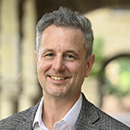
Jeff Hancock is the Harry and Norman Chandler Professor of Communication at Stanford University and Founding Director of the Stanford Social Media Lab and Director of the Stanford Tech, Impact & Policy Center. Professor Hancock studies the impact of social media and AI technology on social dynamics, well-being, and trust.

Dr. Brent Hecht has been doing award-winning data-centric artificial intelligence research for over 15 years. His early work was central in identifying what we now call 'algorithmic bias'. More recently, Dr. Hecht was one of the first scholars to raise alarms about how AI uses data without consent or compensation. For over a decade, he has advocated for alternative approaches that give people and institutions control over how their data is used in AI, both for those people and institutions, but also for the long-term sustainability of the AI ecosystem. In doing so, his lab originated ideas like "data strikes", "data dividends", and "data leverage". He is the recipient of a CAREER award from the U.S. National Science Foundation and was on the founding executive committee of ACM FAccT, the premier publication venue for responsible AI research.
Dr. Hecht is also the leader of a team of exceptional scientists at Microsoft that has done mission-critical work for the company in areas like differentially-private synthetic data, fine-tuning for multi-party (group) reasoning, and, most importantly, defining and working towards a positive vision for AI in the future of work. He additionally serves as a scientific advisor at Microsoft for strategic explorations on topics like data markets and data value estimation. Dr. Hecht's academic work and work at Microsoft have received Best Paper recognition at top-tier publication venues in human-centered AI (e.g., ACM SIGCHI, ACM KDD, ACM CSCW, ACM Mobile HCI, AAAI ICWSM)

Ágnes Horvát is an Associate Professor of Communication Studies and Computer Science (by courtesy) at Northwestern University, and director of the Lab on Innovation, Networks, and Knowledge (LINK). Her research lies in human-centered computing and network science and investigates how online spaces operate and disseminate information. Her group strives to make digital tools more efficient for scientists, entrepreneurs, and creative artists. Her recent projects investigate the use of LLMs in scientific writing and music creation, study biases in online attention to science, identify cases of collective intelligence and opportunities for improved decision-making, and develop frameworks to examine persuasion and opinion change in online discussions. Her work has been awarded an NSF CAREER, CRII, and collaborative awards as PI. Her doctoral advisees have received highly competitive prizes, including a Northwestern Presidential Fellowship and best student paper awards at international conferences. Her research has been featured recently in Nature, The New York Times, The Washington Post, Le Monde, The Economist, and Frankfurter Allgemeine Zeitung.

Dr. Yun Huang is an Associate Professor in the School of Information Sciences at the University of Illinois at Urbana-Champaign. She develops AI solutions that promote human–AI synergy, expand educational access, and improve community services. Her work, funded by agencies such as NSF, IMLS, and NIDILRR and industry leaders including OpenAI, Google, and IBM Research, focuses on translating research into real-world impact. She was recently selected for the 2024–25 Emerging Research Leaders Academy at Illinois’ Interdisciplinary Health Sciences Institute and holds a Ph.D. from UC Irvine and a bachelor’s degree in computer science from Tsinghua University.

Jessica Hullman is Ginni Rometty Professor of Computer Science and a Fellow at the Institute of Policy Research at Northwestern University. Her research develops methods for appraising and combining human and artificial intelligence. She works between theory and application, grounding her contributions in formal models of rational inference such as Bayesian decision theory while addressing real-world decision problems. Her current interests include designing to achieve human-AI complementarity, quantifying and expressing prediction uncertainty, and LLM use in behavioral science. Jessica’s work has been awarded multiple best paper awards at top conferences, a Microsoft Faculty award, and NSF CAREER, Medium, and Small awards as PI, among others.

Neelam is a Postdoctoral Research Scholar in the Management Division at Columbia Business School and the Tamer Institute for Social Enterprise and Climate Change. Her research examines the social and geographic predictors of new venture formation and success. Separately, she is also exploring how generative AI is reshaping human cognition and how it can be better leveraged in the classroom to improve student learning outcomes.

Vipin Kumar is a Regents Professor and William Norris Land Grant Chair in Computer Science and Engineering at the University of Minnesota. He is internationally recognized for contributions to artificial intelligence, data science, and high-performance computing, and for advancing AI-driven scientific discovery. His work on knowledge-guided machine learning integrates scientific principles into AI models to improve generalization, robustness, and scientific consistency, with applications in environmental and Earth system sciences. Kumar is a Fellow of AAAI, AAAS, ACM, IEEE, and SIAM. In 2026, he was appointed to the United Nations Independent International Scientific Panel on Artificial Intelligence, the first global scientific body established by the UN General Assembly to provide independent, evidence-based assessments of AI.

Jacqueline (Jackie) Lane is an Assistant Professor in the Technology and Operations Management Unit at Harvard Business School and a co-Principal Investigator of the Laboratory for Innovation Science at Harvard (LISH) at the Digital Data Design Institute (D³). She teaches Technology and Operations Management (TOM) in the MBA first-year required curriculum.
Jackie’s research examines how organizations navigate creative problem-solving—from identifying and framing problems, to generating solutions, to evaluating which ideas and projects to pursue. A central focus of her work is how AI-augmented decision-making shapes these processes, particularly in early-stage innovation contexts. She studies how different forms of expertise—human, artificial, and hybrid—affect problem selection, idea evaluation, and the ability to surface high-potential but unconventional ideas. Her research also explores when and why evaluators over- or under-rely on AI recommendations, and how evaluation formats, narratives, and decision architectures influence perceived feasibility and novelty.
Jackie conducts field experiments and collaborates closely with organizations across a range of innovation settings, including NASA, Harvard Medical School, startup accelerators, and entrepreneurial ventures. Through these partnerships, her work generates practical insights into how organizations can design better evaluation processes, scale expertise, and improve decision-making under uncertainty to identify and advance breakthrough ideas.

Manling Li is an Assistant Professor at Northwestern University and an Amazon Scholar. She was a postdoc at Stanford University, and obtained the PhD degree in Computer Science at University of Illinois Urbana-Champaign in 2023. She works on Reasoning, Planning and Compositionality, in the intersection of Language, Vision, and Robotics. Her work has been recognized as ACL Inaugural Dissertation Award Honorable Mention, ACL’24 Outstanding Paper Award, and NAACL'21 Best Demo Paper Award, ACL'20 Best Demo Paper Award, MIT Tech Review 35 Innovators Under 35, Microsoft Research PhD Fellowship, EE CS Rising Star, etc. She served as virtual co-chairs of ACL 25, publication co-chairs at NAACL 25, demo co-chairs at EMNLP 24, etc. Visit Manling Li's website for additional information.

Yingdan Lu (Ph.D., Stanford University) is an Assistant Professor in the Department of Communication Studies at Northwestern University. She is the director of the Computational Media and Politics Lab and the co-director of the Computational Multimodal Communication Lab. Her research focuses on digital technology, political communication, and information manipulation. She uses computational and qualitative methods to understand the role of digital technologies in authoritarian politics and develops computational frameworks to understand visual, auditory, and multimodal communication in AI-mediated environments. Her work has appeared in peer-reviewed journals such as Proceedings of the National Academy of Sciences (PNAS), American Journal of Political Science, Political Communication, New Media & Society, among others. For more information, visit Yingan Lu's website.
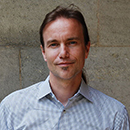
Jörg Matthes is Professor of Communication Science at the Department of Communication, University of Vienna, Austria. His research explores digital media effects, artificial intelligence, advertising, political communication, sustainability communication, and empirical methods. He has published extensively on these topics, with over 300 journal articles to date. In 2014, he received the Young Scholar Award from the International Communication Association (ICA), followed by AEJMC’s Hillier Krieghbaum Under 40 Award in 2016. In 2021, he was elected Fellow of the ICA, and in 2022, he was awarded an Advanced Grant (€2.5 million) from the European Research Council. He has served the field in various editorial roles, including as Associate Editor and Editor-in-Chief of Communication Methods & Measures, and as Associate Editor for Journal of Communication, Human Communication Research, and the Journal of Advertising. He currently serves as Editor of Communication Theory.

David Mimno is a professor and chair of the department of Information Science at Cornell University. He was previously Head Programmer for the Perseus Digital Library at Tufts. He holds a PhD in Computer Science from UMass Amherst and was a postdoc at Princeton University. His work has been supported by the Sloan foundation, the NEH, Schmidt Sciences, and the NSF. His team builds computational tools to help connect people to culture through documents.
Peter Monge is Professor Emeritus of Communication at the Annenberg School of Communication and Professor Emeritus of Management and Organization at the Marshall School of Business, University of Southern California. He and Manuel Castells co-founded the Annenberg Networks Network, and he served as co-director with Janet Fulk until 2021. He has published five books, including Theories of Communication Networks co-authored with Noshir Contractor, and over 100 journal articles and book chapters in the fields of social networks, organizational communication, information systems and research methods. He served as editor of Communication Research from 1986 to 1993. His work over the years has been supported by a number of funding organizations, including the NSF, the NIH, and NASA. Peter is a fellow and former president of the International Communication Association (1997-1998) and a Distinguished Scholar of the National Communication Association. His work has received numerous awards over the years, including the ICA Steven H. Chaffee Career Achievement Award and the USC Provost’s Mentoring Award.

Julia Neidhardt is a tenure-track Assistant Professor at the Data Science Research Unit, TU Wien in Vienna, Austria. She leads the Christian Doppler Lab for Recommender Systems at TU Wien and has held the UNESCO Co-Chair on Digital Humanism since 2023. She has a background in mathematics and computer science and has been a guest researcher at the Austrian Academy of Sciences, Northwestern University, and the University of Geneva.
Her research focuses on user modeling, recommender systems (news, e-commerce, tourism), online social media analysis, and Digital Humanism. Her current work includes generative conversational recommender systems and the impact of digitalisation on linguistic diversity. She is widely published, regularly invited to speak internationally, and serves the community as a program committee member, associate editor, and conference chair. She is part of the Digital Humanism Initiative and serves on the board of the TU Wien Center for AI and Machine Learning (CAIML).

Julio Mario Ottino is McCormick Institute Professor of Engineering and Professor of Management and Organizations at Northwestern University's Kellogg School of Management, and co-founder and co-director of the Northwestern Institute on Complex Systems (NICO). A world authority on mixing, chaos, and complexity, he is a member of the National Academy of Engineering, the National Academy of Sciences, and the American Academy of Arts and Sciences. As Dean of the McCormick School of Engineering, he pioneered whole-brain engineering education and launched major university-wide initiatives, programs, degrees, and centers spanning nearly every sector of the university. His 2022 book The Nexus maps the convergence of art, technology, and science as a framework for navigating complex systems.

Winson Peng is Professor of Communication at Michigan State University His research centers on computational communication science, social media, and AI-enabled methods for social science.
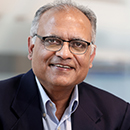
Atul Prakash received his B.Tech degree in Electrical Engineering from IIT, Delhi, and Ph.D. in Computer Science from UC Berkeley in 1989. Currently, he is serving as Chair of Computer Science and Engineering at the University of Michigan. His current research is in the areas of both systems security and security of machine learning and agentic systems. His work on the trustworthiness of AI systems has included work on showing the feasibility of robust physical perturbation attacks on computer vision classifiers, vulnerability of stateful blackbox defenses for classifiers, and vulnerability of even guarded large language models to jailbreak attacks on their alignment properties. He has also worked on efficiency considerations in machine learning. He has mentored several Ph.D. students who have gone on to faculty positions, become successful entrepreneurs, and are serving in major tech companies.

Aaron Schecter is an Associate Professor of Management Information Systems at the University of Georgia, Terry College of Business. Dr. Schecter received his undergraduate and masters degrees in Applied Mathematics and Statistics from Johns Hopkins University, and a PhD in Industrial Engineering and Management Science from Northwestern University. Dr. Schecter’s current research focus is on how technologies change the way people make decisions, solve problems, and coordinate with others. In particular, he is interested in human-machine interaction, machine learning and AI, open source software, and social networks.

Alberto Maria Segre is Professor of Computer Science and the Gerard P. Weeg Faculty Scholar in Informatics at the University of Iowa, where he has served as Department Chair since 2010. He co-directs the Computational Epidemiology Research Group (CompEpi), an interdisciplinary team working on problems in computational epidemiology, including disease diffusion modeling, disease surveillance, risk assessment and mitigation, and other computational problems at the intersection of technology, medicine, and wellness.

Aaron Shaw is Associate Professor of Communication Studies and Sociology (by courtesy) at Northwestern University; Co-Founder of the Community Data Science Collective; an affiliate of the Northwestern Center for HCI+Design, the Institute for Policy Research, and the Buffett Institute for Global Affairs; as well as a Faculty Associate of the Berkman Klein Center for Internet & Society at Harvard. His most recent work includes projects on LLM-based social science, AI impacts on digital public infrastructure, online community governance, and a forthcoming book with MIT Press on Peer Production.

Ben Shneiderman is an Emeritus Distinguished University Professor in the Department of Computer Science, Founding Director (1983-2000) of the Human-Computer Interaction Laboratory, and a Member of the UM Institute for Advanced Computer Studies (UMIACS) at the University of Maryland. He is a Fellow of the AAAS, ACM, IEEE, NAI, and the Visualization Academy and a Member of the U.S. National Academy of Engineering. He has received six honorary doctorates in recognition of his pioneering contributions to human-computer interaction and information visualization. His widely-used contributions include the clickable highlighted web-links, high-precision touchscreen keyboards for mobile devices, and tagging for photos. Shneiderman’s information visualization innovations include dynamic query sliders for Spotfire, development of treemaps for viewing hierarchical data, novel network visualizations for NodeXL, and event sequence analysis for electronic health records. Ben is the lead author of Designing the User Interface: Strategies for Effective Human-Computer Interaction (6th ed., 2016). He co-authored Readings in Information Visualization: Using Vision to Think (1999) and Analyzing Social Media Networks with NodeXL (2nd edition, 2019). His book Leonardo’s Laptop (MIT Press) won the IEEE book award for Distinguished Literary Contribution. The New ABCs of Research: Achieving Breakthrough Collaborations (Oxford, 2016) describes how research can produce higher impacts. His book, Human-Centered AI, published by Oxford University Press in February 2022, was the winner of the Association of American Publishers award for Computer and Information Systems.

Cuihua (Cindy) Shen is a professor of communication at the University of California, Davis and the co-founder of the Computational and Multimodal Communication (CMMC) Lab. She is a Fellow of the International Communication Association and an Editor-in-Chief of the Journal of Computer-Mediated Communication. Her research focuses broadly on computational social science and multimodal (mis)information in AI-mediated environments.

V.S. Subrahmanian is the Walter P. Murphy Professor of Computer Science at the McCormick School of Engineering, Northwestern University and Buffett Faculty Fellow at the Northwestern Roberta Buffett Institute for Global Affairs. He is also the head of the Northwestern Security and AI Laboratory (NSAIL). Prior to this, Subrahmanian was The Dartmouth College Distinguished Professor in Cybersecurity, Technology, and Society at Dartmouth College with tenure in the Computer Science Department and Director of the Institute for Security, Technology and Society (ISTS). Prior to joining Dartmouth, he was a tenured Professor in the University of Maryland's Computer Science Department. He served a 6.5-year stint as Director of the University of Maryland's Institute for Advanced Computer Studies, where he co-founded the Lab for Computational Cultural Dynamics and founded the Center for Digital International Government. His work stands squarely at the intersection of data-driven AI for increased security, policy, and business needs. Prof. Subrahmanian has been an invited speaker at the United Nations, Capitol Hill, the Mumbai Stock Exchange, and numerous other prestigious forums.

Brian Uzzi is the Richard L. Thomas Professor of Leadership at the Kellogg School of Management, Northwestern University. He also is Co-Director of the Northwestern University Institute on Complex Systems (NICO) and The Ryan Institute on Complexity (RIC), and a professor in sociology and the McCormick School of Engineering.
Brian’s work focuses on the link between social networks and human achievement and the role of AI in mind + machine partnerships.
Brian has been awarded over 30 teaching and research prizes worldwide in sociology, management, ecology, and computer science, is a Network Science Society Fellow, a recipient of the Euler Award, and a member of the American Academy of Arts and Sciences.
He has been on the faculties of Harvard, INSEAD, University of Chicago, and Berkeley and his widely cited research has been funded by DARPA, NSF, and other foundations. He consults for companies and governments worldwide.
Before entering science, Brian worked as a carpenter and a musician. His PhD is from Stony Brook University in sociology.
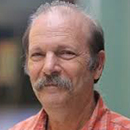
Moshe Y. Vardi is a University Professor, and the George Distinguished Service Professor in Computational Engineering at Rice University. He is the author and co-author of over 800 papers, as well as two books. He is the recipient of several scientific awards, is a fellow of several societies, and a member of several honorary academies. He holds ten honorary titles. He is a Senior Editor of Communications of the ACM, the premier publication in computing, focusing on the societal impact of information technology.

Dashun Wang is the Kellogg Chair of Technology and Professor at the Kellogg School of Management, Northwestern University. He is also affiliated with the McCormick School of Engineering and the Weinberg College of Arts and Sciences. At Kellogg, he is the Founding Director of the Northwestern Innovation Institute, Founding Co-Director of the Ryan Institute on Complexity, and the Founding Director of the Center for Science of Science and Innovation (CSSI). Dashun is a recipient of numerous awards for his research and teaching, including the Advanced Science Young Innovator Award, AFOSR Young Investigator Award, Poets & Quants Best 40 Under 40 Professors, Erdos-Renyi Prize, and more.

Dan Wang is the Lambert Family Professor of Social Enterprise at Columbia Business School, where he is also Faculty Co-director of the Tamer Institute for Social Enterprise and Climate Change. He is also the creator of CAiSEY, a voice-based AI tool for instructors that has helped thousands of students across dozens of universities learn through conversation. His research examines how social networks drive social and economic transformation through global migration, social activism, innovation, and entrepreneurship. His work has been published in top journals in management, sociology, and psychology, and has been recognized with various honors and fellowships. At CBS, he teaches MBA, Executive Education, and PhD courses on Strategy Formulation, Technology Strategy, and Organizational Theory, for which he has garnered multiple school- and world-wide awards. He frequently contributes to the news media about topics at the intersection of technology, business, and society. He received his PhD in Sociology from Stanford University and BA from Columbia University.

Tian Yang is an Assistant Professor at the School of Journalism and Communication at The Chinese University of Hong Kong. His research interest is at the intersection of digital media, political communication, and computational social science.

Yian Yin is currently Assistant Professor of Information Science at Cornell University. His research interests lie at the intersection of network science and computational social science, with a particular focus on the science of science. His research has been published in journals including Science, Nature, and Nature Human Behaviour, and supported by the National Science Foundation, the National Aeronautics and Space Administration, Schmidt Sciences, and the UK Economic and Social Research Council.