

Events
Past Event
Data Science Nights - September 2021 Meeting (Speakers: Caitlin Casar & Alexandra Saldan of 84.51°)
Northwestern Institute on Complex Systems (NICO)
5:15 PM
Details

SEPTEMBER MEETING: Thursday, September 30, 2021 at 5:30pm (US Central) via Zoom and Gather
DATA SCIENCE NIGHTS are monthly hack nights on popular data science topics, organized by Northwestern University graduate students and scholars. Aspiring, beginning, and advanced data scientists are welcome!
AGENDA:
5:15: Welcome to Data Science Nights via Zoom
* Zoom Link: https://northwestern.zoom.us/j/99629833246
5:30: Presentation by Caitlin Casar & Alexandra Saldan, 84.51°
6:00: Code+Cookies on Gather Town
* Gather link: https://gather.town/app/UCTJAHOgQi2FLx4O/DSN
SPEAKERS:
Caitlin Casar - Data Science Development Program, 84.51°. 2021 PhD, Earth and Planetary Sciences, Northwestern University. NASA Earth and Space Sciences Fellowship
Alexandra Saldan - Senior Data Scientist, 84.51°. 2016 WCAS graduate, Mathematical Methods in the Social Sciences and Linguistics
TOPIC: From Astrobiology to Retail Data Science at 84.51°
84.51° is a retail data science, insights, and media company with several office locations including Chicago and Cincinnati. We help the Kroger Company, consumer packaged goods companies, agencies, publishers and affiliated partners create more personalized and valuable experiences for shoppers across the path to purchase, from initial awareness to activation, retention and beyond. Powered by cutting-edge science, we leverage first party retail data from nearly 1 of 2 US households and more than two billion transactions to fuel a more customer-centric journey. 84.51° is currently hiring data scientists for both internship and full-time roles. Join us to hear more about what we do at the company and our paths from Northwestern to 84.51°. We’ll give you an overview of data science roles at 84.51° and how you can apply to work with us.
For more info: data-science-nights.org
Supporting Groups:
This event is supported by the Northwestern Institute for Complex Systems and the Northwestern Data Science Initiative.
Time
Thursday, September 30, 2021 at 5:15 PM - 7:30 PM
Contact
Calendar
Northwestern Institute on Complex Systems (NICO)
WED@NICO SEMINAR: Rafael Prieto-Curiel, Complexity Science Hub Vienna "Why Incarcerating Cartel Members has not Worked to Reduce their Violence"
Northwestern Institute on Complex Systems (NICO)
12:00 PM
//
Lower Level, Chambers Hall
Details
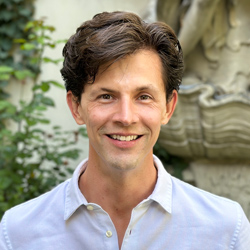
Speaker:
Rafael Prieto-Curiel, Faculty Member, Complexity Science Hub Vienna
Title:
Why Incarcerating Cartel Members has not Worked to Reduce their Violence
Abstract:
Organised crime cartels must largely be analysed as black boxes because direct observation is rarely possible, and available evidence consists mostly of imperfect proxies and very limited data. I will present complex systems models to quantify recruitment and incarceration to analyse the effect of organised criminals in Mexico. The results suggest that incarcerating cartel members has minor effects on reducing cartel violence, even with harsher punishment or longer sentences.
Speaker Bio:
Rafael Prieto-Curiel is a Faculty Member at the Complexity Science Hub, working on violence, mobility, migration and urban dynamics. He works for the OECD and the World Bank, where he does a spatial and demographic analysis of cities. He is the Scientific Advisor of Aleph.
He was awarded the “Science Breakthrough” award by the Falling Walls Foundation in 2024.
Before, he was at the Mathematical Institute of the University of Oxford / UCL CASA, working on urban dynamics at the Peak Urban project. He earned an MSc in Statistics and a PhD in Maths and Security and Crime at University College London (UCL).
He worked in the Emergency Attention Centre from Mexico City (C5) as Director of Strategic Analysis. His work consisted basically of crime forecasting and police and resource allocation.
Rafael is very interested in science communication. When he was an undergraduate student, he directed Laberintos e Infinitos, a maths magazine. When he started his PhD at UCL, he founded Chalkdust, a mathematics magazine. He also founded Punto Decimal MX, a science communication website. In total, he has published 11 editions of a maths magazine, with nearly 30,000 printed copies and edited nearly 500 articles by more than 200 authors.
Location:
In person: Chambers Hall, 600 Foster Street, Lower Level
Remote option: https://northwestern.zoom.us/j/94858847147
About the Speaker Series:
Wednesdays@NICO is a vibrant weekly seminar series focusing broadly on the topics of complex systems, networks, and artificial intelligence. It brings together attendees ranging from graduate students to senior faculty who span all of the schools across Northwestern, from applied math to sociology to biology and every discipline in-between. Please visit: https://bit.ly/WedatNICO for information on future speakers.
Time
Wednesday, October 28, 2026 at 12:00 PM - 1:00 PM
Location
Lower Level, Chambers Hall Map
Contact
Calendar
Northwestern Institute on Complex Systems (NICO)
Data Science Nights - OCTOBER 2026 - Speaker: Vamsi Varanasi, Cofounder and CEO of Tuva
Northwestern Institute on Complex Systems (NICO)
5:30 PM
//
E223, Technological Institute
Details

OCTOBER MEETING: Thursday, October 29, 2026 at 5:30pm (US Central)
LOCATION:
ChBE Conference Room, Tech E223
2145 Sheridan Road, Evanston, IL 60208
AGENDA:
5:30pm - Meet and greet with refreshments
6:00pm - Talk with Vamsi Varanasi, Cofounder and CEO of Tuva
SIGN UP:
Please register for this event in advance here: https://luma.com/zftb0rsm
SPEAKER:
Vamsi Varanasi is cofounder and CEO of Tuva and a theoretical biophysicist working with groups at NYU and UChicago, where he studies RNA interactions using statistical physics and machine learning. He previously cofounded Sora ID (acquired by CLEAR) and studied physics and electrical engineering at Stanford.
ABSTRACT:
How are researchers actually using AI? Drawing on conversations with heavy AI adopters in labs at Harvard, Stanford, and UChicago, this talk will highlight strategies that are working. We’ll discuss real use cases from heavy adopters, like agents that handle analysis "no grad student wants to do" and nightly literature bots. We’ll also cover the mental models that super-users are using to think about adapting to rapid model improvement and what it's like building a science tool at an early-stage startup. Aryan Thakur is part of the founding team at Tuva, a startup building tools to help researchers get the most out of AI.
DATA SCIENCE NIGHTS are monthly meetings featuring presentations and discussions about data-driven science and complex systems, organized by Northwestern University graduate students and scholars. Students and researchers of all levels are welcome! For more information: http://bit.ly/nico-dsn
Time
Thursday, October 29, 2026 at 5:30 PM - 7:00 PM
Location
E223, Technological Institute Map
Contact
Calendar
Northwestern Institute on Complex Systems (NICO)
WED@NICO SEMINAR: Hamsa Bastani, University of Pennsylvania "Challenges in Achieving Human-AI Collaboration"
Northwestern Institute on Complex Systems (NICO)
12:00 PM
//
Lower Level, Chambers Hall
Details
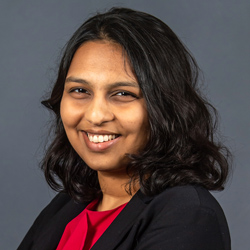
Speaker:
Hamsa Bastani, Associate Professor of Operations, Information, and Decisions, and Statistics and Data Science, Wharton School, University of Pennsylvania
Title:
Designing Human-AI Collaboration to Build Human Expertise
Abstract:
Effective human-AI collaboration not only requires human expertise, but also produces it: how we interact with AI today shapes our capabilities tomorrow. This talk draws on three large-scale field studies to examine how AI can improve immediate performance while supporting long-term skill development.
First, in an experiment with nearly 1,000 high school students in Turkey, we find that unfettered GPT-4 access improves assisted performance but harms short-term learning in mathematics. Second, a 12-week study with chess academies shows that self-regulated AI use (where students can request additional help at any time) substantially reduces learning gains relative to system-regulated assistance. Our analysis suggests that harm is concentrated within students’ “zones of proximal development,” where assistance displaces productive struggle; most requests occur outside this zone, with no evidence of harm. This suggests that targeting assistance to situations where it does not displace productive struggle can preserve AI’s performance benefits while protecting learning. Finally, generative AI is both the poison and the cure: the conversational data generated through human-AI interactions offer a window into users’ knowledge states and problem-solving processes, which contains rich information for targeting assistance. In collaboration with the Taipei City Government’s Department of Education, we use student-chatbot interactions and reinforcement learning to personalize the sequence of practice problems across ten high schools, significantly improving learning over a five-month Python certification course.
Taken together, these studies suggest that AI can be designed to preserve and create opportunities for productive struggle, strengthening the human expertise on which effective collaboration depends. Joint work with Osbert Bastani, Angel Chung, Stefanos Poulidis, Alp Sungu, and others.
Speaker Bio:
Hamsa Bastani is an Associate Professor of Operations, Information, and Decisions at the Wharton School, University of Pennsylvania. Her research focuses on developing novel machine learning algorithms for social impact, including in healthcare and education. She has worked with national governments to deploy algorithms at the country scale for targeted border COVID-19 screening and essential medicine access, and co-led one of the first large field studies of generative AI tutors in high schools. Her research has been published in leading outlets including Nature, Management Science, Operations Research, and PNAS, and has garnered numerous recognitions, including the Wagner Prize for Excellence in Operations Research, the INFORMS Pierskalla Award for best healthcare paper, and the George Nicholson Prize.
Location:
In person: Chambers Hall, 600 Foster Street, Lower Level
Remote option: https://northwestern.zoom.us/j/91360427929
About the Speaker Series:
Wednesdays@NICO is a vibrant weekly seminar series focusing broadly on the topics of complex systems, networks, and artificial intelligence. It brings together attendees ranging from graduate students to senior faculty who span all of the schools across Northwestern, from applied math to sociology to biology and every discipline in-between. Please visit: https://bit.ly/WedatNICO for information on future speakers.
Time
Wednesday, November 4, 2026 at 12:00 PM - 1:00 PM
Location
Lower Level, Chambers Hall Map
Contact
Calendar
Northwestern Institute on Complex Systems (NICO)
WED@NICO SEMINAR: Mayank Agrawal, Proof of Human "The Invisible Turing Test for the Internet"
Northwestern Institute on Complex Systems (NICO)
12:00 PM
//
Lower Level, Chambers Hall
Details
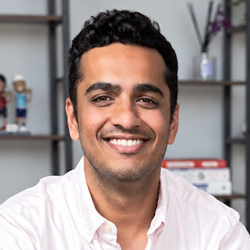
Speaker:
Mayank Agrawal, Co-founder and CEO, Proof of Human
Title:
Proof of Human: the Invisible Turing Test for the Internet
Abstract:
This presentation introduces the Process Turing Test, a new framework for distinguishing humans from AI that goes beyond linguistic output to analyze behavioral dynamics. As LLMs routinely pass text-based Turing Tests, we need methods that probe the underlying architecture of intelligence through perception, control, and decision-making patterns. Using process tracing data from canonical cognitive tasks, we demonstrate how behavioral embeddings capture computational signatures unique to human cognition. This provides robust proof-of-personhood that resists adversarial attacks while revealing fundamental principles about how humans and machines process information differently.
Speaker Bio:
Mayank Agrawal is the co-founder and CEO of Proof of Human, a research and deployment company building the proof-of-human layer in digital identity. The company develops high-impact research and translates that work into systems for bot detection, fraud prevention, and continuous authentication. Mayank’s work focuses on new approaches to distinguishing humans from AI through behavioral and cognitive signals. He earned his PhD in Psychology and Neuroscience from Princeton University, where he studied computational models of human decision-making with Jonathan Cohen, Tom Griffiths, and Nathaniel Daw. His research spans cognitive science, machine learning, and artificial intelligence, with work published in Science, PNAS, and Psychological Review. He previously studied Computer Science and Philosophy at Swarthmore College.
Location:
In person: Chambers Hall, 600 Foster Street, Lower Level
Remote option: https://northwestern.zoom.us/j/96392420891
About the Speaker Series:
Wednesdays@NICO is a vibrant weekly seminar series focusing broadly on the topics of complex systems, networks, and artificial intelligence. It brings together attendees ranging from graduate students to senior faculty who span all of the schools across Northwestern, from applied math to sociology to biology and every discipline in-between. Please visit: https://bit.ly/WedatNICO for information on future speakers.
Time
Wednesday, November 11, 2026 at 12:00 PM - 1:00 PM
Location
Lower Level, Chambers Hall Map
Contact
Calendar
Northwestern Institute on Complex Systems (NICO)