

Events
Past Event
WED@NICO SEMINAR: Cedric Langbort & So Sasaki, University of Illinois "Some Models of Content Moderation for Social Networks in the Presence of Competition"
Northwestern Institute on Complex Systems (NICO)
12:00 PM
//
Lower Level, Chambers Hall
Details
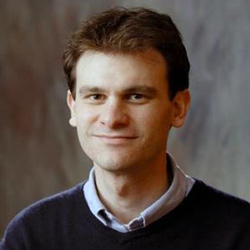
Speakers:
Cedric Langbort & So Sasaki, Coordinated Science Lab, University of Illinois at Urbana–Champaign (UIUC)
Title:
Some Models of Content Moderation for Social Networks in the Presence of Competition
Abstract:
The past decade has witnessed a range of shifting and sometimes contradictory behaviors among social media platforms regarding their content moderation policies. These behaviors often seem to have been adopted more as reactions to societal and legal pressures than as strategic choices aimed at better serving the platform's users or beating the competition. It is natural to wonder, however, whether a platform’s set of regulations, or lack thereof, can be used as a competitive advantage, since users may choose to switch to a competitor if they feel that the moderation rules in place limit their access to content they value.
We aim to address this question in this talk by asking what content moderation policy a platform should chose to satisfy its base and/or to become/remain dominant in a market where platforms compete for users and their attention.
More precisely, we consider two stylized settings (both being extensions of Morris' celebrated model of network contagion, one where platforms can curb the amount of deception employed by a news source, the other where they directly choose the kind of content that is allowed to circulate) and determine policies that two strategic and competing platforms can sustain in equilibrium when their users value both content and social interaction. In the first setting, we further investigate how the effectiveness of the policy depends on parameters such as network structure, news virality or size and cohesiveness of in-network communities... In the second setting, we study whether tailoring the moderation policy to different subgroups may help a platform better serve its users when it is in competition with others. While these models admittedly make a number of simplifying assumptions, which we discuss, we believe they provide valuable insight towards an economically normative view of content moderation for social networks.
Speaker Bio:
Cedric Langbort is a Professor of Aerospace Engineering at the University of Illinois at Urbana Champaign (UIUC), where he is also affiliated with the Decision & Control Group at the Coordinated Science Lab (CSL), and the department of Electrical and Computer Engineering. He works on applications of control, game, and optimization theory to a variety of fields and co- founded and co-directed the Center for People & Infrastructures at CSL. His and his advisees’ work have garnered multiple recognitions such as a NSF CAREER Award, a Siebel Energy Institute Research Award, an IEEE CDC Best Student Paper Award and a NDSEG fellowship. Most recently, he has been leading a US DoD MURI project on Information Exchange Network Dynamics funded by ARO, in which, along with psychologists, communication scientists and behavioral economists, he investigates the dynamics of (mis)information over networks.
So Sasaki received his Bachelor and Masters of Engineering in Aeronautics and Astronautics from the University of Tokyo, as well as an M.S. in Electrical Engineering from UC San Diego. He is currently working toward his Ph.D. degree at the Decision and Control Group, Coordinated Science Lab, University of Illinois at Urbana–Champaign. His research interests include game, optimization, control, graph theory, and machine learning, with application to social media.
Location:
In person: Chambers Hall, 600 Foster Street, Lower Level
Remote option: https://northwestern.zoom.us/j/95560170313
Passcode: NICO25
About the Speaker Series:
Wednesdays@NICO is a vibrant weekly seminar series focusing broadly on the topics of complex systems, data science and network science. It brings together attendees ranging from graduate students to senior faculty who span all of the schools across Northwestern, from applied math to sociology to biology and every discipline in-between. Please visit: https://bit.ly/WedatNICO for information on future speakers.
Time
Wednesday, January 29, 2025 at 12:00 PM - 1:00 PM
Location
Lower Level, Chambers Hall Map
Contact
Calendar
Northwestern Institute on Complex Systems (NICO)
Data Science Nights - MAY 2026 - Speaker: Xudong Tang, Computer Science and NICO
Northwestern Institute on Complex Systems (NICO)
5:30 PM
//
M416, Technological Institute
Details

MAY MEETING: Thursday, May 28, 2026 at 5:30pm (US Central)
LOCATION:
ESAM Conference Room, Tech M416
2145 Sheridan Road, Evanston, IL 60208
AGENDA:
5:30pm - Meet and greet with refreshments
6:00pm - Talk with Xudong Tang, PhD Student, Computer Science, NICO, and the Human-AI Collaboration Lab, Northwestern University
TALK TITLE:
Human and Machine Perception of Voice Similarity
ABSTRACT:
Modern voice cloning systems generate synthetic speech that listeners frequently cannot identify as being synthetic. But a voice can sound natural without sounding like the intended person, and what determines whether a clone is heard as a particular person is an open question. Here we report a large-scale preregistered experiment in which we collected 92,239 responses from 175 participants on their perception of pairs of real recordings, voice clones, and continuously morphed voices drawn from 100 contemporary celebrities across 20 speaker groups. We find that voice clones do not reliably preserve perceived speaker identity, reducing same-speaker judgments by 12.7 percentage points even though the clones are produced by a state-of-the-art text-to-speech model, while leaving different-speaker judgments unchanged. Using continuously morphed stimuli, we find that speakers vary substantially in how much variation their perceived identity tolerates, and that this variation is not predicted by speaker demographics. Speaker embeddings account for 58.9\% (95\% CI = [55.7, 61.9]) of variance in identity judgments, which is more than acoustic features, social attributes, and clone status combined. Once all these observed features are accounted for, clone status adds no additional predictive power. These results shows that the perceptual impact of voice cloning is positional rather than categorical: we can model how listeners judge a voice by how close it falls to the perceptual boundary that defines each speaker's recognizable voice, applying the same criterion to real and synthetic speech alike.
DATA SCIENCE NIGHTS are monthly meetings featuring presentations and discussions about data-driven science and complex systems, organized by Northwestern University graduate students and scholars. Students and researchers of all levels are welcome! For more information: http://bit.ly/nico-dsn
FUTURE DATES:
Data Science Nights will return in September!
Time
Thursday, May 28, 2026 at 5:30 PM - 7:00 PM
Location
M416, Technological Institute Map
Contact
Calendar
Northwestern Institute on Complex Systems (NICO)
Spring 2026 Commencement
University Academic Calendar
All Day
Details
Spring 2026 Commencement
Time
Sunday, June 14, 2026
Contact
Calendar
University Academic Calendar
Juneteenth - University Closed
University Academic Calendar
All Day
Details
Juneteenth - University Closed
Time
Friday, June 19, 2026
Contact
Calendar
University Academic Calendar
Independence Day (observed) - University Closed
University Academic Calendar
All Day
Details
Independence Day (observed) - University Closed
Time
Friday, July 3, 2026
Contact
Calendar
University Academic Calendar
Fall 2026 Classes Begin
University Academic Calendar
All Day
Details
Fall 2026 Classes Begin
Time
Wednesday, September 23, 2026
Contact
Calendar
University Academic Calendar