

Events
Past Event
WED@NICO SEMINAR: Hyejin Youn, Kellogg School "Nested Skills in Labor Ecosystems: A Hidden Dimension of Human Capital"
Northwestern Institute on Complex Systems (NICO)
12:00 PM
//
Lower Level, Chambers Hall
Details

Speaker:
Hyejin Youn, Associate Professor, Kellogg School of Management, Northwestern University
Title:
Nested Skills in Labor Ecosystems: A Hidden Dimension of Human Capital
Abstract:
Modern economies, characterized by their vast output of goods and services, operate through globally interconnected networks. As economies become more complex, so do these networks, coordinating increasingly diverse portfolios of specialized efforts and knowledge. In this study, we analyze U.S. survey data (2005–2019) to infer an underlying interdependency tree within the fabric of skill portfolios. Hierarchically constructed, this skill tree starts from widely needed, foundational abilities, constituting the root, and extends to highly specialized, niche skills required by select jobs at the extremities. The directionality is defined by the asymmetrical conditional probabilities of the presence of one skill given the existence of another. Examining 70 million job transitions in resumes and national surveys, we observe that individuals tend to delve deeper into these nested specialization paths as they ascend the career ladder to enjoy higher wage premiums. Nevertheless, the role of foundational skills for such ascent remains pivotal; without reinforcing them, the anticipated wage premiums may vanish. Hence, we further differentiate nested skills from others, with the former building on common prerequisites while the latter does not, and analyze disparities in these skill gaps across different geographic locations, genders, and racial/ethnic groups, observing how these variations in absorptive capacity impact wage premiums. Our analysis reveals a growing and concerning fragmentation in the divide between these two skill groups over the past two decades, suggesting further polarization within the job landscape. Our findings highlight the critical role of robust foundational skills as a stepping stone to specialization and the economic advantages it can confer, reinforcing the need for balanced skill development strategies in complex economies.
Speaker Bio:
Hyejin Youn is an Associate Professor at the Kellogg School of Management, and a core faculty at NICO, the Northwestern Institute on Complex Systems. Her research interests are to understand the interplay between technological innovation and socio-economic systems (urbanization, economic diversity and specialization, invention activity, future of work). Her goal is to develop a theoretical, yet empirically grounded, framework that will enable us to turn the increasing volumes of data into scientific insights and well-designed policies, an approach known as computational social science. The mathematical tools and computational methods that are used include scaling theory, spatial analysis (including percolation theory, information theory and fractal dimension analysis), statistics, and network theory.
Location:
In person: Chambers Hall, 600 Foster Street, Lower Level
Remote option: https://northwestern.zoom.us/j/97614034362
Passcode: NICO2024
About the Speaker Series:
Wednesdays@NICO is a vibrant weekly seminar series focusing broadly on the topics of complex systems and data science. It brings together attendees ranging from graduate students to senior faculty who span all of the schools across Northwestern, from applied math to sociology to biology and every discipline in-between. Please visit: https://bit.ly/WedatNICO for information on future speakers.
Time
Wednesday, March 13, 2024 at 12:00 PM - 1:00 PM
Location
Lower Level, Chambers Hall Map
Contact
Calendar
Northwestern Institute on Complex Systems (NICO)
WED@NICO SEMINAR: Hamsa Bastani, University of Pennsylvania "Challenges in Achieving Human-AI Collaboration"
Northwestern Institute on Complex Systems (NICO)
12:00 PM
//
Lower Level, Chambers Hall
Details
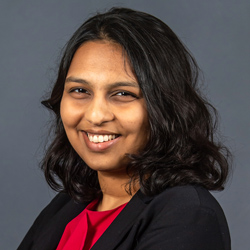
Speaker:
Hamsa Bastani, Associate Professor of Operations, Information, and Decisions, and Statistics and Data Science, Wharton School, University of Pennsylvania
Title:
Designing Human-AI Collaboration to Build Human Expertise
Abstract:
Effective human-AI collaboration not only requires human expertise, but also produces it: how we interact with AI today shapes our capabilities tomorrow. This talk draws on three large-scale field studies to examine how AI can improve immediate performance while supporting long-term skill development.
First, in an experiment with nearly 1,000 high school students in Turkey, we find that unfettered GPT-4 access improves assisted performance but harms short-term learning in mathematics. Second, a 12-week study with chess academies shows that self-regulated AI use (where students can request additional help at any time) substantially reduces learning gains relative to system-regulated assistance. Our analysis suggests that harm is concentrated within students’ “zones of proximal development,” where assistance displaces productive struggle; most requests occur outside this zone, with no evidence of harm. This suggests that targeting assistance to situations where it does not displace productive struggle can preserve AI’s performance benefits while protecting learning. Finally, generative AI is both the poison and the cure: the conversational data generated through human-AI interactions offer a window into users’ knowledge states and problem-solving processes, which contains rich information for targeting assistance. In collaboration with the Taipei City Government’s Department of Education, we use student-chatbot interactions and reinforcement learning to personalize the sequence of practice problems across ten high schools, significantly improving learning over a five-month Python certification course.
Taken together, these studies suggest that AI can be designed to preserve and create opportunities for productive struggle, strengthening the human expertise on which effective collaboration depends. Joint work with Osbert Bastani, Angel Chung, Stefanos Poulidis, Alp Sungu, and others.
Speaker Bio:
Hamsa Bastani is an Associate Professor of Operations, Information, and Decisions at the Wharton School, University of Pennsylvania. Her research focuses on developing novel machine learning algorithms for social impact, including in healthcare and education. She has worked with national governments to deploy algorithms at the country scale for targeted border COVID-19 screening and essential medicine access, and co-led one of the first large field studies of generative AI tutors in high schools. Her research has been published in leading outlets including Nature, Management Science, Operations Research, and PNAS, and has garnered numerous recognitions, including the Wagner Prize for Excellence in Operations Research, the INFORMS Pierskalla Award for best healthcare paper, and the George Nicholson Prize.
Location:
In person: Chambers Hall, 600 Foster Street, Lower Level
Remote option: https://northwestern.zoom.us/j/91360427929
About the Speaker Series:
Wednesdays@NICO is a vibrant weekly seminar series focusing broadly on the topics of complex systems, networks, and artificial intelligence. It brings together attendees ranging from graduate students to senior faculty who span all of the schools across Northwestern, from applied math to sociology to biology and every discipline in-between. Please visit: https://bit.ly/WedatNICO for information on future speakers.
Time
Wednesday, November 4, 2026 at 12:00 PM - 1:00 PM
Location
Lower Level, Chambers Hall Map
Contact
Calendar
Northwestern Institute on Complex Systems (NICO)
WED@NICO SEMINAR: Mayank Agrawal, Proof of Human "The Invisible Turing Test for the Internet"
Northwestern Institute on Complex Systems (NICO)
12:00 PM
//
Lower Level, Chambers Hall
Details

Speaker:
Mayank Agrawal, Co-founder and CEO, Proof of Human
Title:
Proof of Human: the Invisible Turing Test for the Internet
Abstract:
This presentation introduces the Process Turing Test, a new framework for distinguishing humans from AI that goes beyond linguistic output to analyze behavioral dynamics. As LLMs routinely pass text-based Turing Tests, we need methods that probe the underlying architecture of intelligence through perception, control, and decision-making patterns. Using process tracing data from canonical cognitive tasks, we demonstrate how behavioral embeddings capture computational signatures unique to human cognition. This provides robust proof-of-personhood that resists adversarial attacks while revealing fundamental principles about how humans and machines process information differently.
Speaker Bio:
Mayank Agrawal is the co-founder and CEO of Proof of Human, a research and deployment company building the proof-of-human layer in digital identity. The company develops high-impact research and translates that work into systems for bot detection, fraud prevention, and continuous authentication. Mayank’s work focuses on new approaches to distinguishing humans from AI through behavioral and cognitive signals. He earned his PhD in Psychology and Neuroscience from Princeton University, where he studied computational models of human decision-making with Jonathan Cohen, Tom Griffiths, and Nathaniel Daw. His research spans cognitive science, machine learning, and artificial intelligence, with work published in Science, PNAS, and Psychological Review. He previously studied Computer Science and Philosophy at Swarthmore College.
Location:
In person: Chambers Hall, 600 Foster Street, Lower Level
Remote option: https://northwestern.zoom.us/j/96392420891
About the Speaker Series:
Wednesdays@NICO is a vibrant weekly seminar series focusing broadly on the topics of complex systems, networks, and artificial intelligence. It brings together attendees ranging from graduate students to senior faculty who span all of the schools across Northwestern, from applied math to sociology to biology and every discipline in-between. Please visit: https://bit.ly/WedatNICO for information on future speakers.
Time
Wednesday, November 11, 2026 at 12:00 PM - 1:00 PM
Location
Lower Level, Chambers Hall Map
Contact
Calendar
Northwestern Institute on Complex Systems (NICO)