

Events
Past Event
WED@NICO SEMINAR: Chris Kuzawa, Northwestern University "Fetal developmental plasticity as signal-noise problem: the case of nutrients and stress physiology"
Northwestern Institute on Complex Systems (NICO)
12:00 PM
//
Lower Level, Chambers Hall
Details
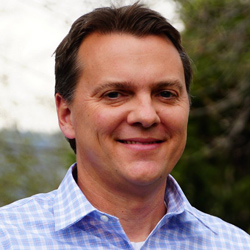
Speaker:
Chris Kuzawa, John D. MacArthur Professor, Department of Anthroplogy, Northwestern University
Title:
Fetal developmental plasticity as signal-noise problem: the case of nutrients and stress physiology
Abstract:
The stage of human development marked by greatest sensitivity and developmental plasticity occurs prior to birth, when the developing embryo and fetus are embedded within the highly regulated intrauterine environment maintained by the mother’s body. In this talk, I will discuss the timescales of maternal experience that modify this milieu, with a focus on two crucial systems: nutrient metabolism and stress physiology. I will argue that elaborate and redundant maternal buffering of nutrient delivery uncouples short term variability in what the mother eats – whether negative changes like famine or improvements in the form of nutritional supplementation - from fetal nutrition and development, which instead track changes in maternal nutrition on a longer, generational timescale. In contrast, stress physiology is by design highly responsive to the mother’s short-term experiences and the responsiveness of these systems have broad spill-over effects on fetal development, thus linking offspring biological and health outcomes to acute variability in maternal stress during pregnancy. I will discuss the relevance of these principles for understanding the evolution of the flow of ecological information across generations and the design of interventions aimed at harnessing early life plasticity to improve future population health.
Speaker Bio:
Chris Kuzawa and his students and collaborators use principles from anthropology and evolutionary biology to gain insights into the biological and health impacts of human developmental plasticity. Thier primary field research is conducted in Cebu, the Philippines, where they work with a large birth cohort study that enrolled more than 3,000 pregnant women in 1983 and has since followed their offspring into adulthood (now 30 years old). They use the nearly 3 decades of data available for each study participant, and recruitment of generation 3 (the grandoffspring of the original mothers), to gain a better understanding of the long-term and intergenerational impacts of early life environments on adult biology, life history, reproduction, and health. A theme of much of this work is the application of principles of developmental plasticity and evolutionary biology to issues of health. Professor Kuzawa is a member of the National Academy of Sciences and American Academy of Arts and Sciences.
Location:
In person: Chambers Hall, 600 Foster Street, Lower Level
Remote option: https://northwestern.zoom.us/j/91503621521
Passcode: NICO23
About the Speaker Series:
Wednesdays@NICO is a vibrant weekly seminar series focusing broadly on the topics of complex systems and data science. It brings together attendees ranging from graduate students to senior faculty who span all of the schools across Northwestern, from applied math to sociology to biology and every discipline in-between. Please visit: https://bit.ly/WedatNICO for information on future speakers.
Time
Wednesday, February 22, 2023 at 12:00 PM - 1:00 PM
Location
Lower Level, Chambers Hall Map
Contact
Calendar
Northwestern Institute on Complex Systems (NICO)
Fall 2026 Classes Begin
University Academic Calendar
All Day
Details
Fall 2026 Classes Begin
Time
Wednesday, September 23, 2026
Contact
Calendar
University Academic Calendar
NICO Reading Group - Fall 2026 First Meeting
Northwestern Institute on Complex Systems (NICO)
6:00 PM
//
Chambers Hall
Details

The NICO Reading Group meets for the first this fall on Wednesday, September 23, 2026. Please contact Jaeseon Ha if you are interested in joining our group.
About:
The NICO Reading Group brings together people across disciplines to read and discuss important ideas in modern AI. We focus on topics such as AI agents, tuning, harnesses, evaluation, AI for scientific discovery, and applications of AI across different fields. The goal is to understand important ideas in AI more deeply by learning and thinking across disciplines.
Leadership:
Jaeseon Ha, a Kellogg MBA + AI student, will lead the reading group during the Fall 2026 term. Please contact Jaeseon with any questions or reach out to us at nico@northwestern.edu.
Meeting Times:
Date: Biweekly on Wednesday evening, starting on September 23, 2026
Time: 6-7pm
Location: NICO main office, Chambers Hall,
600 Foster St, Evanston, IL 60208
Time
Wednesday, September 23, 2026 at 6:00 PM - 7:00 PM
Location
Chambers Hall Map
Contact
Calendar
Northwestern Institute on Complex Systems (NICO)
WED@NICO Seminar Series returns on September 30, 2026
Northwestern Institute on Complex Systems (NICO)
12:00 PM
//
Lower Level, Chambers Hall
Details
The Wednesdays@NICO seminar series returns September 30, 2026, running through November 11, 2026, with the following speakers.
9/30/2026 - Luis Amaral, Northwestern University
10/7/2026 - Kristina Lerman, Indiana University
10/14/2026 - Tim Tangherlini, University of California, Berkeley
10/21/2026 - Andreia Sofia Teixeira, Northeastern University London
10/28/2026 - Rafael Prieto-Curiel, Complexity Science Hub, Vienna
11/4/2026 - Hamsa Bastani, University of Pennsylvania
11/11/2026 - Mayank Agrawal, Proof of Human
We will share detailed speaker information, talk titles and abstracts, in the coming weeks.
Location:
In person: Chambers Hall, 600 Foster Street, Lower Level
Remote option TBA
About the Speaker Series:
Wednesdays@NICO is a vibrant weekly seminar series focusing broadly on the topics of complex systems, networks, and artificial intelligence. It brings together attendees ranging from graduate students to senior faculty who span all of the schools across Northwestern, from applied math to sociology to biology and every discipline in-between. Please visit: https://bit.ly/WedatNICO for information on future speakers.
Time
Wednesday, September 30, 2026 at 12:00 PM - 1:00 PM
Location
Lower Level, Chambers Hall Map
Contact
Calendar
Northwestern Institute on Complex Systems (NICO)