

Events
Past Event
WED@NICO SEMINAR: Yong-Yeol "YY" Ahn, Indiana University Bloomington "Science of science, law of law, and patterns of patents: universal citation dynamics in knowledge systems"
Northwestern Institute on Complex Systems (NICO)
12:00 PM
//
Lower Level, Chambers Hall
Details
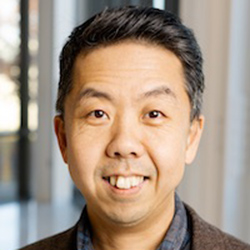
Speaker:
Yong-Yeol "YY" Ahn, Associate Professor, Center for Complex Networks and Systems Research, Luddy School of Informatics, Computing, and Engineering, Indiana University Bloomington
Title:
Science of science, law of law, and patterns of patents: universal citation dynamics in knowledge systems
Abstract:
Citation is a fundamental way for humans to acquire and expand on existing knowledge. Although many laws and regularities of citation dynamics have been discovered from scientific citations, it is unclear whether and to what extent these regularities are inherent in how humans seek, use, and create knowledge. We show that, despite many stark differences between these systems, the citation dynamics in science, law, and patents share universal patterns. Given the differences in procedure and incentives that exist between judges, inventors, and scientists, our findings suggest that universal citation dynamics may be innate to any cumulative human knowledge system. Our model demonstrates that the evolution of collective attention and a handful of fundamental mechanisms can produce observed universal patterns of citation dynamics.
Speaker Bio:
Yong-Yeol (YY) Ahn is an Associate Professor at Indiana University School of Informatics, Computing, and Engineering. He was a Visiting Professor at MIT during 2020-2021. Before joining Indiana University, he worked as a postdoctoral research associate at the Center for Complex Network Research at Northeastern University and as a visiting researcher at the Center for Cancer Systems Biology at Dana-Farber Cancer Institute after earning his PhD in Statistical Physics from KAIST in 2008. His research focuses on developing network science and machine learning methods, and applying them to complex social and biological systems. He is a recipient of several awards including Microsoft Research Faculty Fellowship and LinkedIn Economic Graph Challenge.
Location:
In person: Chambers Hall, 600 Foster Street, Lower Level
Remote option: https://northwestern.zoom.us/j/93818374439
Passcode: NICO23
About the Speaker Series:
Wednesdays@NICO is a vibrant weekly seminar series focusing broadly on the topics of complex systems and data science. It brings together attendees ranging from graduate students to senior faculty who span all of the schools across Northwestern, from applied math to sociology to biology and every discipline in-between. Please visit: https://bit.ly/WedatNICO for information on future speakers.
Time
Wednesday, February 15, 2023 at 12:00 PM - 1:00 PM
Location
Lower Level, Chambers Hall Map
Contact
Calendar
Northwestern Institute on Complex Systems (NICO)
Fall 2026 Classes Begin
University Academic Calendar
All Day
Details
Fall 2026 Classes Begin
Time
Wednesday, September 23, 2026
Contact
Calendar
University Academic Calendar
NICO Reading Group - Fall 2026 First Meeting
Northwestern Institute on Complex Systems (NICO)
6:00 PM
//
Chambers Hall
Details

The NICO Reading Group meets for the first this fall on Wednesday, September 23, 2026. Please contact Jaeseon Ha if you are interested in joining our group.
About:
The NICO Reading Group brings together people across disciplines to read and discuss important ideas in modern AI. We focus on topics such as AI agents, tuning, harnesses, evaluation, AI for scientific discovery, and applications of AI across different fields. The goal is to understand important ideas in AI more deeply by learning and thinking across disciplines.
Leadership:
Jaeseon Ha, a Kellogg MBA + AI student, will lead the reading group during the Fall 2026 term. Please contact Jaeseon with any questions or reach out to us at nico@northwestern.edu.
Meeting Times:
Date: Biweekly on Wednesday evening, starting on September 23, 2026
Time: 6-7pm
Location: NICO main office, Chambers Hall,
600 Foster St, Evanston, IL 60208
Time
Wednesday, September 23, 2026 at 6:00 PM - 7:00 PM
Location
Chambers Hall Map
Contact
Calendar
Northwestern Institute on Complex Systems (NICO)
WED@NICO Seminar Series returns on September 30, 2026
Northwestern Institute on Complex Systems (NICO)
12:00 PM
//
Lower Level, Chambers Hall
Details
The Wednesdays@NICO seminar series returns September 30, 2026, running through November 11, 2026, with the following speakers.
9/30/2026 - Luis Amaral, Northwestern University
10/7/2026 - Kristina Lerman, Indiana University
10/14/2026 - Tim Tangherlini, University of California, Berkeley
10/21/2026 - Andreia Sofia Teixeira, Northeastern University London
10/28/2026 - Rafael Prieto-Curiel, Complexity Science Hub, Vienna
11/4/2026 - Hamsa Bastani, University of Pennsylvania
11/11/2026 - Mayank Agrawal, Proof of Human
We will share detailed speaker information, talk titles and abstracts, in the coming weeks.
Location:
In person: Chambers Hall, 600 Foster Street, Lower Level
Remote option TBA
About the Speaker Series:
Wednesdays@NICO is a vibrant weekly seminar series focusing broadly on the topics of complex systems, networks, and artificial intelligence. It brings together attendees ranging from graduate students to senior faculty who span all of the schools across Northwestern, from applied math to sociology to biology and every discipline in-between. Please visit: https://bit.ly/WedatNICO for information on future speakers.
Time
Wednesday, September 30, 2026 at 12:00 PM - 1:00 PM
Location
Lower Level, Chambers Hall Map
Contact
Calendar
Northwestern Institute on Complex Systems (NICO)