

Events
Past Event
WED@NICO SEMINAR: Haoqi Zhang, Northwestern University "Computational Ecosystems: Tech-enabled Communities to Advance Human Values at Scale"
Northwestern Institute on Complex Systems (NICO)
12:00 PM
//
Lower Level, Chambers Hall
Details
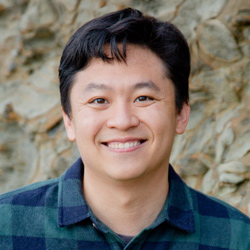
Speaker:
Haoqi Zhang - Associate Professor of Computer Science, Northwestern University
Title:
Computational Ecosystems: Tech-enabled Communities to Advance Human Values at Scale
Abstract:
Despite the continued development of individual technologies and processes for supporting human endeavors, major leaps in solving complex human problems will require advances in system-level thinking and orchestration. In this talk, I describe efforts to design, build, and study Computational Ecosystems that interweave community process, social structures, and intelligent systems to unite people and machines to solve complex problems and advance human values at scale. Computational ecosystems integrate various components to support ecosystem function; the interplay among components synergistically advances desired values and problem solving goals in ways that isolated technologies and processes cannot. Taking a systems approach to design, computational ecosystems emphasize (1) computational thinking to decompose and distribute problem solving to diverse people or machines most able to address them; and (2) ecological thinking to create sustainable processes and interactions that support jointly the goals of ecosystem members and proper ecosystem function.
I present examples of computational ecosystems designed to advance community-based planning and research training, that respectively engages thousands of people in planning an event and empowers a single faculty member to provide authentic research training to 20+ students. These solutions demonstrate how to combine wedges of human and machine competencies into integrative technology-supported, community-based solutions. I will preview what's ahead for computational ecosystems, and close with a few thoughts on the (potentially limited) role of computing technologies in advancing human values.
Speaker Bio:
Haoqi Zhang is an associate professor in Computer Science and Design at Northwestern University. His work advances the design of integrated socio-technical models that solve complex problems and advance human values. His research bridges the fields of Human-Computer Interaction, Artificial Intelligence, Social & Crowd Computing, Learning Science, and Decision Science, and is generously supported by National Science Foundation grants in Cyber-Human Systems, Cyberlearning, and the Research Initiation Initiative.
Haoqi received his PhD in Computer Science and BA in Computer Science and Economics from Harvard University. At Northwestern he founded and directs the Design, Technology, and Research (DTR) program, which provides an original model for research training for over 100 graduate and undergraduate students. With Matt Easterday, Liz Gerber, and Nell O'Rourke, Haoqi co-directs the Delta Lab, an interdisciplinary research lab and design studio across computer science, learning science, and design.
Location:
In person: Chambers Hall, 600 Foster Street, Lower Level
Remote option: https://northwestern.zoom.us/j/99280277544
Passcode: NICO2022
About the Speaker Series:
Wednesdays@NICO is a vibrant weekly seminar series focusing broadly on the topics of complex systems and data science. It brings together attendees ranging from graduate students to senior faculty who span all of the schools across Northwestern, from applied math to sociology to biology and every discipline in-between. Please visit: https://bit.ly/WedatNICO for information on future speakers.
Time
Wednesday, April 6, 2022 at 12:00 PM - 1:00 PM
Location
Lower Level, Chambers Hall Map
Contact
Calendar
Northwestern Institute on Complex Systems (NICO)
Fall 2026 Classes Begin
University Academic Calendar
All Day
Details
Fall 2026 Classes Begin
Time
Wednesday, September 23, 2026
Contact
Calendar
University Academic Calendar
NICO Reading Group - Fall 2026 First Meeting
Northwestern Institute on Complex Systems (NICO)
6:00 PM
//
Chambers Hall
Details

The NICO Reading Group meets for the first this fall on Wednesday, September 23, 2026. Please contact Jaeseon Ha if you are interested in joining our group.
About:
The NICO Reading Group brings together people across disciplines to read and discuss important ideas in modern AI. We focus on topics such as AI agents, tuning, harnesses, evaluation, AI for scientific discovery, and applications of AI across different fields. The goal is to understand important ideas in AI more deeply by learning and thinking across disciplines.
Leadership:
Jaeseon Ha, a Kellogg MBA + AI student, will lead the reading group during the Fall 2026 term. Please contact Jaeseon with any questions or reach out to us at nico@northwestern.edu.
Meeting Times:
Date: Biweekly on Wednesday evening, starting on September 23, 2026
Time: 6-7pm
Location: NICO main office, Chambers Hall,
600 Foster St, Evanston, IL 60208
Time
Wednesday, September 23, 2026 at 6:00 PM - 7:00 PM
Location
Chambers Hall Map
Contact
Calendar
Northwestern Institute on Complex Systems (NICO)
WED@NICO Seminar Series returns on September 30, 2026
Northwestern Institute on Complex Systems (NICO)
12:00 PM
//
Lower Level, Chambers Hall
Details
The Wednesdays@NICO seminar series returns September 30, 2026, running through November 11, 2026, with the following speakers.
9/30/2026 - Luis Amaral, Northwestern University
10/7/2026 - Kristina Lerman, Indiana University
10/14/2026 - Tim Tangherlini, University of California, Berkeley
10/21/2026 - Andreia Sofia Teixeira, Northeastern University London
10/28/2026 - Rafael Prieto-Curiel, Complexity Science Hub, Vienna
11/4/2026 - Hamsa Bastani, University of Pennsylvania
11/11/2026 - Mayank Agrawal, Proof of Human
We will share detailed speaker information, talk titles and abstracts, in the coming weeks.
Location:
In person: Chambers Hall, 600 Foster Street, Lower Level
Remote option TBA
About the Speaker Series:
Wednesdays@NICO is a vibrant weekly seminar series focusing broadly on the topics of complex systems, networks, and artificial intelligence. It brings together attendees ranging from graduate students to senior faculty who span all of the schools across Northwestern, from applied math to sociology to biology and every discipline in-between. Please visit: https://bit.ly/WedatNICO for information on future speakers.
Time
Wednesday, September 30, 2026 at 12:00 PM - 1:00 PM
Location
Lower Level, Chambers Hall Map
Contact
Calendar
Northwestern Institute on Complex Systems (NICO)