
Events
Past Event
WED@NICO WEBINAR: Irena Vodenska, Boston University
Northwestern Institute on Complex Systems (NICO)
12:00 PM
Details
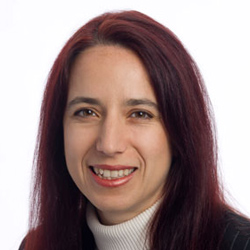
Speaker:
Irena Vodenska, Associate Professor in Finance, Director, Finance Programs, Metropolitan College, Boston University
Title:
A bird’s-eye view into the origin of systemic risk: Financial Institutions, Sovereign Debt, and Public Health and Policy
Abstract:
As economic entities become increasingly interconnected, shocks in financial and economic networks can provoke significant cascading failures throughout the system. To study systemic risk, we model financial institutions' relationships, economic dependencies, and production flows to propose a cascading failure model describing the risk propagation process during crises. We find that our model efficiently identifies a significant portion of the failed banks reported by the Federal Deposit Insurance Corporation during the Global Financial Crisis of 2008. We also study the European sovereign debt crisis of 2009-2012 and observe that the results closely match real-world events (e.g., the high risk of Greek sovereign bonds and Greek banks' distress). We propose an institutional, systemic importance ranking, BankRank, for the financial institutions analyzed in the European bank study to assess individual banks' contribution to the overall systemic risk. Finally, we propose a dynamic cascade model to investigate the systemic risk posed by sector level industries within the U.S. inter-industry network. We then use this model to study the effect of the disruption presented by COVID-19 during 2020 on the U.S. economy. We impose an initial shock that disrupts one or more industries' production capacity and calculates the propagation of production shortage with a modified Cobb-Douglas production function. In the case of COVID-19, the initial shock reflects the loss of labor between March and April 2020, as reported by the Bureau of Labor Statistics. These studies suggest that the cascading failure models could be useful for systemic risk stress testing for financial and economic systems. The models could become complementary to existing stress tests and scenario analysis, incorporating the contribution of the interconnectivity of the banks, governments, and industries to systemic risk in time-dependent networks.
Speaker Bio:
Irena Vodenska is an associate professor of finance and director of finance programs at Boston University’s Metropolitan College. Her research focuses on network theory and complexity science in macroeconomics. She conducts a theoretical and applied interdisciplinary research using quantitative approaches for modeling interdependencies of financial networks, banking system dynamics, and global financial crises. More specifically, Vodenska’s research focuses on modeling of early warning indicators and systemic risk propagation throughout interconnected financial and economic networks. She also studies the effects of news announcement on financial markets, corporations, financial institutions, and related global economic systems. She uses neural networks and deep learning methodologies for natural language processing to text mine important factors affecting corporate performance and global economic trends. Prof. Vodenska teaches Investment Analysis and Portfolio Management, International Finance and Trade, Financial Regulation and Ethics, and Derivatives Securities and Markets at Boston University. Vodenska holds a Ph.D. in Econophysics (Statistical Finance) from Boston University, MBA from Owen Graduate School of Management at Vanderbilt University and BS in Computer Information Systems from the University of Belgrade. She is also a Chartered Financial Analyst (CFA) charter holder. As a principal investigator (PI) for Boston University, she has won interdisciplinary research grants awarded by the European Commission (EU), Network Science Division of the US Army Research Office, and the National Science Foundation (US).
Webinar:
Webinar link: https://northwestern.zoom.us/j/94202105939
Passcode: nico
ID: 942 0210 5939
About the Speaker Series:
Wednesdays@NICO is a vibrant weekly seminar series focusing broadly on the topics of complex systems and data science. It brings together attendees ranging from graduate students to senior faculty who span all of the schools across Northwestern, from applied math to sociology to biology and every discipline in-between. Please visit: https://bit.ly/WedatNICO for information on future speakers.
Time
Wednesday, January 27, 2021 at 12:00 PM - 1:00 PM
Contact
Calendar
Northwestern Institute on Complex Systems (NICO)
WED@NICO SEMINAR: Alex Imas, University of Chicago "Agentic Interactions"
Northwestern Institute on Complex Systems (NICO)
12:00 PM
//
Lower Level, Chambers Hall
Details
Speaker:
Alex Imas, Roger L. and Rachel M. Goetz Professor of Behavioral Science, Economics, and Applied AI, University of Chicago, Booth School of Business
Title:
Agentic Interactions
Abstract:
Do human differences persist and scale when decisions are delegated to AI agents? In this talk we will explore an experimental marketplace in which individuals author instructions for buyer-and seller-side agents that negotiate on their behalf. We compare these AI agentic interactions to standard human-to-human negotiations in the same setting. First, contrary to predictions of more homogenous outcomes, agentic interactions lead to, if anything, greater dispersion in outcomes compared to human-mediated interactions. Second, crossing agents across counterparties reveals systematic dispersion in outcomes that tracks the identity and characteristics of the human creators; who designs the agent matters as much as, and often more than, shared information or code. Canonical behavioral frictions reappear in agentic form: personality traits shape agent behavior and selection on principal characteristics yields sorting. Despite AI agents not having access to the human principal's characteristics, demographics such as gender and personality variables have substantial explanatory power for outcomes, in ways that are sometimes reversed from human-to-human interactions. Moreover, we uncover significant variation in "machine fluency"-the ability to instruct an AI agent to effectively align with one's objective function-that is predicted by principals' individual types, suggesting a new source of heterogeneity and inequality in economic outcomes. These results indicate that the agentic economy inherits, transforms, and may even amplify, human heterogeneity. Finally, we highlight a new type of information asymmetry in principal-agent relationships and the potential for specification hazard, and discuss broader implications for welfare, inequality, and market power in economies increasingly transacted through machines shaped by human intent.
Speaker Bio:
Alex Imas studies behavioral economics with a focus on how people understand and mentally represent the choices they are facing. His research explores topics related to how people learn and make choices in settings with risk and uncertainty. He also studies the economics of artificial intelligence and discrimination. Alex’s work utilizes a variety of methods, including controlled laboratory experiments, field experiments, analysis of observational data and theoretical modeling.
Alex is the recipient of the 2023 Alfred P. Sloan Research Fellowship, the Review of Financial Studies Rising Scholar Award, the New Investigator Award from the Behavioral Science and Policy Association, the Hillel Einhorn New Investigator Award from the Society of Judgment and Decision Making, the Distinguished CESifo Affiliate Award, and the NSF Graduate Research Fellowship. He is the co-author, with Richard Thaler, of The Winner’s Curse: Behavioral Economics Anomalies, Then and Now. He is an Associate Editor at the Journal of the European Economic Association and on the editorial board of Psychological Science.
Location:
In person: Chambers Hall, 600 Foster Street, Lower Level
Remote option: https://northwestern.zoom.us/j/91389366431
PW: NICO26
About the Speaker Series:
Wednesdays@NICO is a vibrant weekly seminar series focusing broadly on the topics of complex systems, data science and network science. It brings together attendees ranging from graduate students to senior faculty who span all of the schools across Northwestern, from applied math to sociology to biology and every discipline in-between. Please visit: https://bit.ly/WedatNICO for information on future speakers.
Time
Wednesday, February 18, 2026 at 12:00 PM - 1:00 PM
Location
Lower Level, Chambers Hall Map
Contact
Calendar
Northwestern Institute on Complex Systems (NICO)
WED@NICO SEMINAR: Todd Florin and Nelson Sanchez-Pinto, Lurie Children's Hospital of Chicago "Pediatric Acute & Critical Care Research & Innovation"
Northwestern Institute on Complex Systems (NICO)
12:00 PM
//
Lower Level, Chambers Hall
Details
Speakers:
Todd Florin, MD, MSCE, Associate Division Head for Academic Affairs & Research, Division of Emergency Medicine, Ann & Robert H. Lurie Children’s Hospital of Chicago; Professor of Pediatrics (Emergency Medicine), Northwestern University Feinberg School of Medicine
L. Nelson Sanchez-Pinto, MD, MBI, Attending Physician, Critical Care, Ann & Robert Lurie Children’s Hospital of Chicago; Associate Professor of Pediatrics (Critical Care) and Preventive Medicine (Health and Biomedical Informatics), Northwestern University Feinberg School of Medicine
Title:
Pediatric Acute & Critical Care Research & Innovation
Abstract:
TBA
Speaker Bios:
Dr. Todd Florin is a founding co-director of the Center for Pediatric Acute and Critical Care Research and Innovation (PACCRI). He is a pediatric emergency medicine physician-scientist with interests in pediatric respiratory infections and expertise in clinical and molecular epidemiology, predictive analytics, and large-scale, multicenter clinical trials in the acute care setting. He is committed to generating and implementing the best evidence to allow for precision care tailored to each patient.
Dr. Nelson Sanchez-Pinto is a founding co-director of the Center for Pediatric Acute and Critical Care Research and Innovation (PACCRI). He is a pediatric critical care medicine physician-scientist with interests in sepsis and expertise in data science and clinical informatics. His goal is to develop, test, and operationalize AI-enabled predictive and prognostic enrichment strategies that can help clinicians provide more personalized and targeted care to critically ill children.
Location:
In person: Chambers Hall, 600 Foster Street, Lower Level
Remote option: https://northwestern.zoom.us/j/92586384543
PW: NICO26
About the Speaker Series:
Wednesdays@NICO is a vibrant weekly seminar series focusing broadly on the topics of complex systems, data science and network science. It brings together attendees ranging from graduate students to senior faculty who span all of the schools across Northwestern, from applied math to sociology to biology and every discipline in-between. Please visit: https://bit.ly/WedatNICO for information on future speakers.
Time
Wednesday, February 25, 2026 at 12:00 PM - 1:00 PM
Location
Lower Level, Chambers Hall Map
Contact
Calendar
Northwestern Institute on Complex Systems (NICO)
WED@NICO SEMINAR: Ágnes Horvát, Northwestern School of Communication
Northwestern Institute on Complex Systems (NICO)
12:00 PM
//
Lower Level, Chambers Hall
Details
Speaker:
Ágnes Horvát, Associate Professor, Department of Communication Studies, Northwestern School of Communication
Title:
TBA
Abstract:
TBA
Speaker Bio:
Ágnes Horvát is an Associate Professor in the Department of Communication Studies, (by courtesy) the Computer Science Department of the McCormick School of Engineering, and (also by courtesy) the Department of Management and Organizations of the Kellogg School of Management.
Her research seeks to measure, understand, and forecast the collective behaviour of networked crowds in large-scale socio-technical systems. On the one hand, her current projects investigate the impact of network embeddedness and diversity on scholarly communication. On the other hand, she works on identifying expressions of collective intelligence and opportunities for innovation in crowdsourcing communities. Her research group also develops empirical and theoretical methods to support creativity and predict success in culture industries. This work lies at the intersection of computational social science and social computing. It uses an interdisciplinary data-driven approach that builds on techniques from network science, machine learning, and statistics.
Location:
In person: Chambers Hall, 600 Foster Street, Lower Level
Remote option: https://northwestern.zoom.us/j/96701776160
PW: NICO26
About the Speaker Series:
Wednesdays@NICO is a vibrant weekly seminar series focusing broadly on the topics of complex systems, data science and network science. It brings together attendees ranging from graduate students to senior faculty who span all of the schools across Northwestern, from applied math to sociology to biology and every discipline in-between. Please visit: https://bit.ly/WedatNICO for information on future speakers.
Time
Wednesday, March 4, 2026 at 12:00 PM - 1:00 PM
Location
Lower Level, Chambers Hall Map
Contact
Calendar
Northwestern Institute on Complex Systems (NICO)
WED@NICO SEMINAR: Steven Franconeri, Northwestern University "Point Taken: A gamified Intervention that Creates Enlightened Disagreements"
Northwestern Institute on Complex Systems (NICO)
12:00 PM
//
Lower Level, Chambers Hall
Details
Speaker:
Steven Franconeri, Professor of Psychology, Weinberg College of Arts & Sciences; Professor of Management and Organizations, Kellogg School of Management, Northwestern University
Title:
Point Taken: A gamified Intervention that Creates Enlightened Disagreements
Abstract:
Should we drop standardized testing for college or Ph.D. admissions? Allow athletes to join teams based on gender identity? When organizational and public policies bind behavior, human coexistence requires a way to determine that collective policy. Because individuals and like-minded groups have incomplete information, constrained strategies, and biased perspectives, thoughtful debate on those policies is critical. Unfortunately, those debates too often degrade into chaotic fights.
Point Taken provides a scalable solution by translating best practices in conflict resolution and critical thinking into a structured dialogue that can be learned and played in 30 minutes. In this interactive session, you'll play a short game to feel its effects.
Players replace persuasion with a common goal of discovering why they disagree. Dialogue then unfolds thoughtfully and calmly, through chains of short written reasons and responses. We've tested the game extensively in schools and organizations, and conducted a formal pilot study. All show powerful improvements in the tone and quality of debate, across longstanding and strongly-held disagreements. I’ll give background on best practices for enlightened disagreement, show how they translate to the game, ask you to play a game, and then ask for your advice on next steps.
Speaker Bio:
Steven Franconeri is leading scientist, teacher, and speaker on visual thinking, visual communication, and the psychology of data visualization. He is a Professor of Psychology in the Weinberg College of Arts & Sciences at Northwestern, Director of the Northwestern Cognitive Science Program, as well as a Kellogg Professor of Management and Organizations by Courtesy. He is the director of the Visual Thinking Laboratory, where a team of researchers explore how leveraging the visual system - the largest single system in your brain - can help people think, remember, and communicate more efficiently.
His undergraduate training was in computer science and cognitive science at Rutgers University, followed by a Ph.D. in Experimental Psychology from Harvard University, and postdoctoral research at the University of British Columbia. His work on both Cognitive Science and Data Visualization has been funded by the National Science Foundation, as well as the Department of Education, and the Department of Defense. He has received a prestigious National Science Foundation CAREER award, given to researchers who combine excellent research with outstanding teaching, and he has received a Psychonomic Society Early Career award for his research on visual thinking.
Location:
In person: Chambers Hall, 600 Foster Street, Lower Level
Remote option: https://northwestern.zoom.us/j/97198523514
PW: NICO26
About the Speaker Series:
Wednesdays@NICO is a vibrant weekly seminar series focusing broadly on the topics of complex systems, data science and network science. It brings together attendees ranging from graduate students to senior faculty who span all of the schools across Northwestern, from applied math to sociology to biology and every discipline in-between. Please visit: https://bit.ly/WedatNICO for information on future speakers.
Time
Wednesday, March 11, 2026 at 12:00 PM - 1:00 PM
Location
Lower Level, Chambers Hall Map
Contact
Calendar
Northwestern Institute on Complex Systems (NICO)