

Events
Past Event
WED@NICO WEBINAR: Maksim Kitsak, Delft University of Technology
Northwestern Institute on Complex Systems (NICO)
12:00 PM
Details
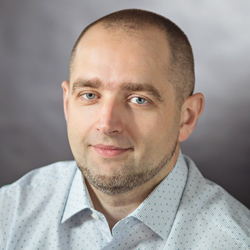
Speaker:
Maksim Kitsak, Assistant Professor, Electrical Engineering, Mathematics and Computer Science, Delft University of Technology
Title:
Geometric Representations of Complementarity-Driven Networks
Abstract:
Similarity is one of the key principles underlying the formation of social networks: the more similar individuals are the higher is the chance for a social interaction between them. Latent geometry provides an elegant way to model similarity in social networks. Network nodes are viewed as points in underlying latent or hidden space, such that distances between them quantify node similarities: the smaller the distance between the two nodes the more similar they are. It is the similarity interpretation of latent distances that lies at the origin of many applications of network embeddings, including link prediction, soft community detection and clustering, network navigation, and search.
In my talk, however, I will focus on another class of networks that are shaped not only by similarity but also by the complementarity principle. Examples of complementarity-driven networks include interdisciplinary collaboration networks, networks of interacting proteins, and, possibly, food webs. Indeed, individuals with complementary expertise are more likely to solve an interdisciplinary problem of interest, and interactions often take place between proteins with complementary chemical properties and/or complementary binding interfaces. One of the most popular food web network models, the niche model, is based not on the similarity but on the complementarity principle, as I will demonstrate.
I will argue that existing network embedding methods are not readily applicable to complementarity-driven networks. I will then deduce a proper framework for the representations of complementarity-driven networks and demonstrate its efficiency in network reconstruction tasks.
Speaker Bio:
Maksim Kitsak is an assistant professor in the faculty of Electrical Engineering, Mathematics and Computer Science at the Delft University of Technology. Dr. Kitsak earned his Ph.D. in theoretical physics from Boston University. Dr. Kitsak has held postdoctoral positions at the Center for Applied Internet Data Analysis (CAIDA), UC San Diego; and the Center for Complex Network Research (CCNR), Northeastern University. His research focuses on the development of theoretical and computational approaches to networked systems, with diverse applications ranging from systems biology to civil infrastructure. Results of his research have been published in top cross-disciplinary journals, such as Nature, Nature Physics, Science, and Science Advances, and have received broad media coverage.
Webinar:
Webinar link: https://northwestern.zoom.us/j/91064172482
Passcode: nico
ID: 910 6417 2482
About the Speaker Series:
Wednesdays@NICO is a vibrant weekly seminar series focusing broadly on the topics of complex systems and data science. It brings together attendees ranging from graduate students to senior faculty who span all of the schools across Northwestern, from applied math to sociology to biology and every discipline in-between. Please visit: https://bit.ly/WedatNICO for information on future speakers.
Time
Wednesday, January 20, 2021 at 12:00 PM - 1:00 PM
Contact
Calendar
Northwestern Institute on Complex Systems (NICO)
WED@NICO SEMINAR: Timothy Tangherlini, UC Berkeley "Chat Agents, Conspiracy Theory & Threat Narratives: Cultural Analytics and Narrative at Scale"
Northwestern Institute on Complex Systems (NICO)
12:00 PM
//
Lower Level, Chambers Hall
Details
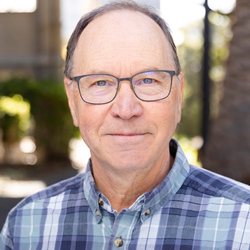
Speaker:
Timothy Tangherlini, Elizabeth H. and Eugene A. Shurtleff Chair in Undergraduate Education, Distinguished Professor in the Dept. of Scandinavian and the School of Information, University of California, Berkeley
Title:
Chat Agents, Conspiracy Theory & Threat Narratives: Cultural Analytics and Narrative at Scale
Abstract:
In this talk, I present current work on the intersection of conspiracy theory and narratives of threat, with the shifting terrain of chat bots increasingly influencing the social media ecosystem. I present a generative model of narratives of threat, explore aspects of stance detection and the narrative sorting of actants and institutions into "insiders" and "outsiders." I then explore the topology of conspiracy theory as a narrative predilection for a comprehensive explanation of allegedly witnessed or experienced phenomena along with inferences about connections based on a monologic world view. Using examples from earlier political social media discussions, and updating these observations in the context of contemporaneous debates about the role of AI in society allow for insight into the thicket of connections that characterize the ongoing negotiation of belief through narrative
Speaker Bio:
Timothy R. Tangherlini, Elizabeth H. and Eugene A. Shurtleff Chair of Undergraduate Education, is a Distinguished Professor in the Dept. of Scandinavian and the School of Information at the University of California, Berkeley. He is also associate director of the Berkeley Institute for Data Science and the Faculty Director of the Berkeley Folklore Archive. He has worked on computational approaches to folklore, with an emphasis on stories and storytelling over the past three decades. Under the auspices of the NSF's Institute for Pure and Applied Mathematics, he co-directed a program on Culture Analytics, as well as an NEH Institute on Network Analysis for the Humanities. He is the author of several books, and various articles. He has done extensive fieldwork on storytelling among paramedics, and shamanism in South Korea, as well as archival work on rural 19th century Denmark. His current work focuses on generative models of common story genres such as legend, rumor, personal experience narratives, and conspiracy theories, as well as understanding cultural phenomena such as dance and cuisine across many scales of analysis.
Location:
In person: Chambers Hall, 600 Foster Street, Lower Level
Remote option: https://northwestern.zoom.us/j/95645191725
About the Speaker Series:
Wednesdays@NICO is a vibrant weekly seminar series focusing broadly on the topics of complex systems, networks, and artificial intelligence. It brings together attendees ranging from graduate students to senior faculty who span all of the schools across Northwestern, from applied math to sociology to biology and every discipline in-between. Please visit: https://bit.ly/WedatNICO for information on future speakers.
Time
Wednesday, October 14, 2026 at 12:00 PM - 1:00 PM
Location
Lower Level, Chambers Hall Map
Contact
Calendar
Northwestern Institute on Complex Systems (NICO)
WED@NICO SEMINAR: Andreia Sofia Teixeira, Northeastern University London "Human Relational Ecology and Conversational AI: From Social Actor to Asymmetric Co-Regulation"
Northwestern Institute on Complex Systems (NICO)
12:00 PM
//
Lower Level, Chambers Hall
Details
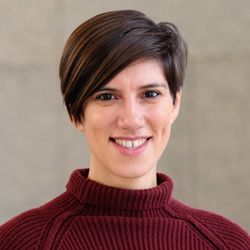
Speaker:
Andreia Sofia Teixeira, Associate Professor, Network Science Institute, Northeastern University London
Title:
Human Relational Ecology and Conversational AI: From Social Actor to Asymmetric Co-Regulation
Abstract:
Human cognition, mental health and relationships unfold within interconnected social systems that change over time. Drawing on work on cognitive-affective structure, the evolution of supportive and conflictual ties in adolescent social networks, and distinct social envirotypes associated with mental health and context-dependent patterns of brain connectivity, I will discuss what these different perspectives tell us about the human relational ecology in which wellbeing is embedded, including the role of co-regulation in shaping emotion, cognition and behaviour.
Understanding this ecology is especially important as conversational AI emerges as a new kind of social actor. These systems can simulate some of the interactional signals associated with co-regulation, including responsiveness, validation, emotional language and apparent empathy, but without reciprocal lived experience, vulnerability, embodiment or shared accountability. I will introduce the concept of asymmetric co-regulation to frame this distinction.
Building on emerging work at the intersection of AI use, social networks and real-world human–AI conversations, I will ask what happens when conversational AI moves beyond instrumental use and starts to occupy more relational roles: when it may scaffold or substitute for existing human capacities and forms of support, how repeated interactions may shape regulation and sense of agency over time, and how these dynamics may become embedded within wider social relationships.
Speaker Bio:
Andreia Sofia Teixeira is an Associate Professor at the Network Science Institute, Northeastern University London, where she leads the BRAN Lab (Behavioral Research and Adaptive Networks). Her research sits at the intersection of network science and machine learning, developing measures, computational models and simulation frameworks to understand the structure and dynamics of complex systems, and how local behaviour can spill over to collective scales. Her work spans human–AI interaction, collective behaviour, cognitive and affective networks, signed and temporal social networks, mental health and neuropsychiatric and neurodegenerative disorders. Across these areas, she is particularly interested in how individual states, relationships and broader social environments shape one another over time.
Location:
In person: Chambers Hall, 600 Foster Street, Lower Level
Remote option: https://northwestern.zoom.us/j/98367624907
About the Speaker Series:
Wednesdays@NICO is a vibrant weekly seminar series focusing broadly on the topics of complex systems, networks, and artificial intelligence. It brings together attendees ranging from graduate students to senior faculty who span all of the schools across Northwestern, from applied math to sociology to biology and every discipline in-between. Please visit: https://bit.ly/WedatNICO for information on future speakers.
Time
Wednesday, October 21, 2026 at 12:00 PM - 1:00 PM
Location
Lower Level, Chambers Hall Map
Contact
Calendar
Northwestern Institute on Complex Systems (NICO)
WED@NICO SEMINAR: Rafael Prieto-Curiel, Complexity Science Hub Vienna "Why Incarcerating Cartel Members has not Worked to Reduce their Violence"
Northwestern Institute on Complex Systems (NICO)
12:00 PM
//
Lower Level, Chambers Hall
Details
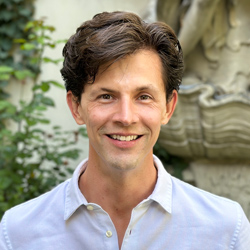
Speaker:
Rafael Prieto-Curiel, Faculty Member, Complexity Science Hub Vienna
Title:
Why Incarcerating Cartel Members has not Worked to Reduce their Violence
Abstract:
Organised crime cartels must largely be analysed as black boxes because direct observation is rarely possible, and available evidence consists mostly of imperfect proxies and very limited data. I will present complex systems models to quantify recruitment and incarceration to analyse the effect of organised criminals in Mexico. The results suggest that incarcerating cartel members has minor effects on reducing cartel violence, even with harsher punishment or longer sentences.
Speaker Bio:
Rafael Prieto-Curiel is a Faculty Member at the Complexity Science Hub, working on violence, mobility, migration and urban dynamics. He works for the OECD and the World Bank, where he does a spatial and demographic analysis of cities. He is the Scientific Advisor of Aleph.
He was awarded the “Science Breakthrough” award by the Falling Walls Foundation in 2024.
Before, he was at the Mathematical Institute of the University of Oxford / UCL CASA, working on urban dynamics at the Peak Urban project. He earned an MSc in Statistics and a PhD in Maths and Security and Crime at University College London (UCL).
He worked in the Emergency Attention Centre from Mexico City (C5) as Director of Strategic Analysis. His work consisted basically of crime forecasting and police and resource allocation.
Rafael is very interested in science communication. When he was an undergraduate student, he directed Laberintos e Infinitos, a maths magazine. When he started his PhD at UCL, he founded Chalkdust, a mathematics magazine. He also founded Punto Decimal MX, a science communication website. In total, he has published 11 editions of a maths magazine, with nearly 30,000 printed copies and edited nearly 500 articles by more than 200 authors.
Location:
In person: Chambers Hall, 600 Foster Street, Lower Level
Remote option: https://northwestern.zoom.us/j/94858847147
About the Speaker Series:
Wednesdays@NICO is a vibrant weekly seminar series focusing broadly on the topics of complex systems, networks, and artificial intelligence. It brings together attendees ranging from graduate students to senior faculty who span all of the schools across Northwestern, from applied math to sociology to biology and every discipline in-between. Please visit: https://bit.ly/WedatNICO for information on future speakers.
Time
Wednesday, October 28, 2026 at 12:00 PM - 1:00 PM
Location
Lower Level, Chambers Hall Map
Contact
Calendar
Northwestern Institute on Complex Systems (NICO)
WED@NICO SEMINAR: Hamsa Bastani, University of Pennsylvania "Challenges in Achieving Human-AI Collaboration"
Northwestern Institute on Complex Systems (NICO)
12:00 PM
//
Lower Level, Chambers Hall
Details
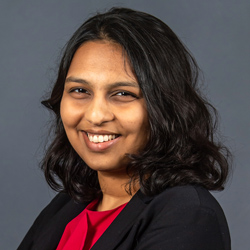
Speaker:
Hamsa Bastani, Associate Professor of Operations, Information, and Decisions, and Statistics and Data Science, Wharton School, University of Pennsylvania
Title:
Challenges in Achieving Human-AI Collaboration
Abstract:
TBA
Speaker Bio:
Hamsa Sridhar Bastani is an Associate Professor of Operations, Information, and Decisions (OID) and Statistics and Data Science at the Wharton School of the University of Pennsylvania, where she co-direct the Wharton Healthcare Analytics Lab. Her research sits at the intersection of machine learning, operations research, and economics. She studies how to design, deploy, and evaluate AI systems that empower human decision-makers and improve societal outcomes.
Professor Bastani aims to combine methodological depth with implementation in consequential environments. She has worked with national governments to deploy algorithms at the country scale for targeted border COVID-19 screening and essential medicine access, and has co-led one of the first large field studies of generative AI tutors in high school mathematics. She studies both the mathematical properties of algorithms and the way people respond to them.
Her research has been published in leading outlets including Nature, Management Science, Operations Research, and PNAS, and has garnered numerous recognitions, including the Wagner Prize for Excellence in Operations Research, the INFORMS Pierskalla Award for best healthcare paper, and the George Nicholson Prize. Previously, she graduated summa cum laude from Harvard in 2012 with an A.M. in physics and an A.B. in physics and mathematics, completed her PhD in Stanford's Electrical Engineering department under the supervision of Mohsen Bayati, and spent a year as a Herman Goldstine postdoctoral fellow at IBM Research.
Location:
In person: Chambers Hall, 600 Foster Street, Lower Level
Remote option: https://northwestern.zoom.us/j/91360427929
About the Speaker Series:
Wednesdays@NICO is a vibrant weekly seminar series focusing broadly on the topics of complex systems, networks, and artificial intelligence. It brings together attendees ranging from graduate students to senior faculty who span all of the schools across Northwestern, from applied math to sociology to biology and every discipline in-between. Please visit: https://bit.ly/WedatNICO for information on future speakers.
Time
Wednesday, November 4, 2026 at 12:00 PM - 1:00 PM
Location
Lower Level, Chambers Hall Map
Contact
Calendar
Northwestern Institute on Complex Systems (NICO)
WED@NICO SEMINAR: Mayank Agrawal, Proof of Human "The Invisible Turing Test for the Internet"
Northwestern Institute on Complex Systems (NICO)
12:00 PM
//
Lower Level, Chambers Hall
Details
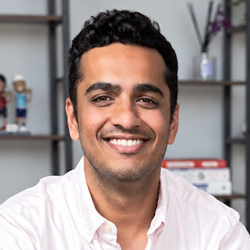
Speaker:
Mayank Agrawal, Co-founder and CEO, Proof of Human
Title:
Proof of Human: the Invisible Turing Test for the Internet
Abstract:
This presentation introduces the Process Turing Test, a new framework for distinguishing humans from AI that goes beyond linguistic output to analyze behavioral dynamics. As LLMs routinely pass text-based Turing Tests, we need methods that probe the underlying architecture of intelligence through perception, control, and decision-making patterns. Using process tracing data from canonical cognitive tasks, we demonstrate how behavioral embeddings capture computational signatures unique to human cognition. This provides robust proof-of-personhood that resists adversarial attacks while revealing fundamental principles about how humans and machines process information differently.
Speaker Bio:
Mayank Agrawal is the co-founder and CEO of Proof of Human, a research and deployment company building the proof-of-human layer in digital identity. The company develops high-impact research and translates that work into systems for bot detection, fraud prevention, and continuous authentication. Mayank’s work focuses on new approaches to distinguishing humans from AI through behavioral and cognitive signals. He earned his PhD in Psychology and Neuroscience from Princeton University, where he studied computational models of human decision-making with Jonathan Cohen, Tom Griffiths, and Nathaniel Daw. His research spans cognitive science, machine learning, and artificial intelligence, with work published in Science, PNAS, and Psychological Review. He previously studied Computer Science and Philosophy at Swarthmore College.
Location:
In person: Chambers Hall, 600 Foster Street, Lower Level
Remote option: https://northwestern.zoom.us/j/96392420891
About the Speaker Series:
Wednesdays@NICO is a vibrant weekly seminar series focusing broadly on the topics of complex systems, networks, and artificial intelligence. It brings together attendees ranging from graduate students to senior faculty who span all of the schools across Northwestern, from applied math to sociology to biology and every discipline in-between. Please visit: https://bit.ly/WedatNICO for information on future speakers.
Time
Wednesday, November 11, 2026 at 12:00 PM - 1:00 PM
Location
Lower Level, Chambers Hall Map
Contact
Calendar
Northwestern Institute on Complex Systems (NICO)