

Events
Past Event
WED@NICO SEMINAR: Michelle Birkett, Northwestern Feinberg Medicine "Bias in Big Data"
Northwestern Institute on Complex Systems (NICO)
12:00 PM
//
Lower Level, Chambers Hall
Details
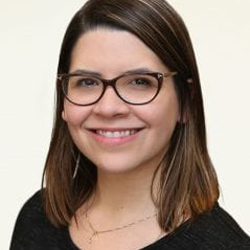
Speaker:
Michelle Birkett - Assistant Professor, Department of Medical Social Sciences; Director, CONNECT Complex Systems and Health Disparities Research Program, Feinberg School of Medicine, Northwestern University
Title:
Bias in Big Data
Abstract:
Our society increasingly relies on data to guide all forms of decision making. This cost-effective, data-led decision making, particularly when guided by unsupervised analytical methods, is often assumed to be free of human bias. However, from hiring decisions to predictive policing, poor Black and Brown populations have been shown to be disproportionately impacted across a wide variety of domains. Less is known, however, about the impact of these systems on sexual and gender minority (SGM) populations and the intersecting identities individuals may hold.
Finding solutions to these problems is immensely complex, and requires the input of a wide range of stakeholders. However, spaces like these are rare. Therefore, the Bias in Big Data 2019 Workshop was organized by the CONNECT Complex Systems and Health Disparities Research Program and held in July 2019 at the Institute for Sexual and Gender Minority Health and Wellbeing. It was organized to be a space to bring together diverse stakeholders across various sectors to discuss solutions, and amplify the good work already being done. Approximately 50 in-person and 800 online participants attended the half day meeting, representing public health, community organizations, data scientists in the private sector, and academics from over 20 universities.
This talk will articulate the six primary themes which emerged from conversations over the course of the workshop and outline a number of recommendations that we believe can be taken up by broad groups of stakeholders – especially academics. The talk will also highlight next steps for this work, including the release of White Paper and a monthly newsletter project which we hope will build important bridges between sectors and disciplines.
Speaker Bio:
Michelle Birkett is a psychologist and Assistant Professor in the Department of Medical Social Sciences at Northwestern University. She also directs the CONNECT Complex Systems and Health Disparities Research Program within the Institute for Sexual and Gender Minority Health and Wellbeing and been a member of NICO’s Executive Committee since 2016. Dr. Birkett’s research uses network and quantitative methodologies to understand the social contextual influence of stigma on the health and wellbeing of marginalized populations, and in particular, sexual and gender minority youth. This work is influenced by a multilevel perspective of health that considers direct and indirect influences of multiple levels of the social and physical environment. Dr. Birkett has led multiple NIH-funded projects and has a wealth of expertise in the collection and analysis of network data. She is a principal investigator of Network Canvas, a free and open source NIH-funded software for the collection of social network data. She is also an NIH Career Awardee for her work understanding network, multilevel, and contextual influences on racial disparities in HIV. An author of more than 50 articles, Dr. Birkett is widely published and her work has been covered in popular outlets such as The Atlantic, Reuters, and Wired. In 2018 she was selected as an inaugural member of the New Voices Program of The National Academies of Sciences, Engineering, and Medicine, an initiative to promote new and diverse scientific voices within the National Academies.
About the Speaker Series:
Wednesdays@NICO is a vibrant weekly seminar series focusing broadly on the topics of complex systems and data science. It brings together attendees ranging from graduate students to senior faculty who span all of the schools across Northwestern, from applied math to sociology to biology and every discipline in-between.
Live Stream:
Time
Wednesday, February 12, 2020 at 12:00 PM - 1:00 PM
Location
Lower Level, Chambers Hall Map
Contact
Calendar
Northwestern Institute on Complex Systems (NICO)
WED@NICO SEMINAR: Gary Slutkin, Cure Violence Global "The End of Violence - How do we do that?" (co-sponsored with CORNERS)
Northwestern Institute on Complex Systems (NICO)
12:00 PM
//
Lower Level, Chambers Hall
Details
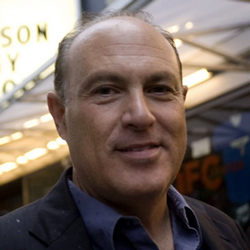
Speaker:
Gary Slutkin, Founder, Cure Violence Global
Title:
The End of Violence - How do we do that?
Abstract:
Dr. Slutkin will discuss the msin findings in his new book “The End of Violence”
After 20 years fighting epidemics of infectious diseases in the U.S., and abroad with the World Health Organization, Dr. Slutkin returned to Chicago and saw violence acting the same way as these other diseases. He then founded Cure Violence Global to show that violence not only behaves like other epidemics, but its spread can be interrupted and stopped using the same playbook. This approach is now being used widely and for many types of violence.
In this book, Dr. Slutkin reveals how we can now understand how violence spreads from person to person and from country to country, through invisible brain processes that can now be identified. He also found that both the contagion, and its interruption, can work for all forms of violence from child abuse to community violence, violence against women, suicide, and even war, genocide and tyranny. The book provides stories and data on success for several of these different forms of violence in Chicago, Baltimore, NYC, Honduras, Mexico, Colombia, Iraq, Syria and even to stop a potential nuclear war between the U.S. and North Korea.
With this new book, we now have not only a new diagnosis of violence – a disease - but a new method to stop it – with results in dozens of communities and countries, as well as a whole new understanding, language and even a whole new set or workers.
Speaker Bio:
Gary Slutkin is a physician and epidemiologist formerly of the World Health Organization, the Founder and CEO of Cure Violence, and an innovator in epidemic management, public health, behavior change, and data-based approaches to local and global problems.
He led or co-led efforts to reverse epidemics of tuberculosis and cholera in 40 refugee camps, led the efforts to start the national AIDS programs with the 13 countries in the epicenter of the epidemic in central and East Africa and, led World Health Organization’s efforts to reverse the AIDS epidemic in Uganda, the only country to successfully reverse its AIDS epidemic at the time.
After 10 years abroad, Dr. Slutkin returned home to the U.S. and shifted his focus to violence, seeing it as an epidemic process. He is credited with having fully revealed the scientific and practical links for seeing and treating violence as a standard health epidemic. In the year 2000 he founded Cure Violence which has achieved 40% to 70% drops in violence in communities around the world using these methods. The approach has also been successfully adapted to curtail political violence, election violence, and gender-based violence in countries around the world.
Location:
In person: Chambers Hall, 600 Foster Street, Lower Level
Remote option: https://northwestern.zoom.us/j/93101362874
About the Speaker Series:
Wednesdays@NICO is a vibrant weekly seminar series focusing broadly on the topics of complex systems, networks, and artificial intelligence. It brings together attendees ranging from graduate students to senior faculty who span all of the schools across Northwestern, from applied math to sociology to biology and every discipline in-between. Please visit: https://bit.ly/WedatNICO for information on future speakers.
Co-Sponsor:
This speaker is co-sponsored with CORNERS.
Time
Wednesday, April 29, 2026 at 12:00 PM - 1:00 PM
Location
Lower Level, Chambers Hall Map
Contact
Calendar
Northwestern Institute on Complex Systems (NICO)
WED@NICO SEMINAR: Daniel Stouffer, Leibniz Institute "Conceptual and Theoretical Challenges in the Study of Multi-Species Coexistence"
Northwestern Institute on Complex Systems (NICO)
12:00 PM
//
Lower Level, Chambers Hall
Details
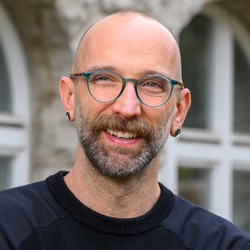
Speaker:
Daniel B. Stouffer, Research Group Leader, Department of Evolutionary and Integrative Ecology, the Leibniz Institute of Freshwater Ecology and Inland Fisheries (IGB), Berlin, Germany
Title:
Conceptual and Theoretical Challenges in the Study of Multi-Species Coexistence
Abstract:
The population dynamics of most ecological communities unfold on temporal scales that cannot be fully studied in the laboratory or field. The generation times of trees, for example, are so long and varied that we may need to wait decades to determine how a whole, interconnected forest community responds to a changing climate. Many researchers thus use models to generate predictions that go beyond the bounds of what is experimentally tractable. To do so, it has become common to follow the "model-paramerisation paradigm". For example, a researcher interested in forest dynamics would not conduct long-term experiments to directly probe whether one tree species is ever competitively excluded by any other(s). Instead, they would use data from shorter-term experiments to estimate the parameters of a presupposed model, and then study whether or not their empirically parameterised model predicts competitive exclusion or coexistence. As powerful as this perspective has proven to be, it routinely hinges on multiple key assumptions that limit its versatility. I will describe recent and ongoing work that challenges these assumptions, while also describing some unexpected hurdles encountered along the way.
Speaker Bio:
Daniel B. Stouffer is a Research Group Leader in the Department of Evolutionary and Integrative Ecology at the Leibniz Institute of Freshwater Ecology and Inland Fisheries (IGB), Berlin, Germany. His group adopts a variety of computational, statistical, and analytical approaches to overcome ecological communities' innate complexity while exploring fundamental biological questions. They work on a variety of topics and systems and are particularly interested in understanding the emergent ecological and evolutionary consequences that arise due to interactions between species.
Location:
In person: Chambers Hall, 600 Foster Street, Lower Level
Remote option: https://northwestern.zoom.us/j/98364690035
About the Speaker Series:
Wednesdays@NICO is a vibrant weekly seminar series focusing broadly on the topics of complex systems, networks, and artificial intelligence. It brings together attendees ranging from graduate students to senior faculty who span all of the schools across Northwestern, from applied math to sociology to biology and every discipline in-between. Please visit: https://bit.ly/WedatNICO for information on future speakers.
Time
Wednesday, May 6, 2026 at 12:00 PM - 1:00 PM
Location
Lower Level, Chambers Hall Map
Contact
Calendar
Northwestern Institute on Complex Systems (NICO)
WED@NICO SEMINAR: Hamsa Bastani, Wharton School, University of Pennsylvania "Challenges in Achieving Human-AI Collaboration"
Northwestern Institute on Complex Systems (NICO)
12:00 PM
//
Lower Level, Chambers Hall
Details
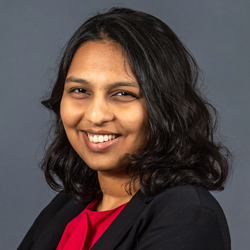
Speaker:
Hamsa Bastani, Associate Professor of Operations, Information, and Decisions, and Statistics and Data Science, Wharton School, University of Pennsylvania
Title:
Challenges in Achieving Human-AI Collaboration
Abstract:
TBA
Speaker Bio:
Hamsa Sridhar Bastani is an Associate Professor of Operations, Information, and Decisions (OID) and Statistics and Data Science at the Wharton School of the University of Pennsylvania, where she co-direct the Wharton Healthcare Analytics Lab. Her research sits at the intersection of machine learning, operations research, and economics. She studies how to design, deploy, and evaluate AI systems that empower human decision-makers and improve societal outcomes.
Professor Bastani aims to combine methodological depth with implementation in consequential environments. She has worked with national governments to deploy algorithms at the country scale for targeted border COVID-19 screening and essential medicine access, and has co-led one of the first large field studies of generative AI tutors in high school mathematics. She studies both the mathematical properties of algorithms and the way people respond to them.
Her research has been published in leading outlets including Nature, Management Science, Operations Research, and PNAS, and has garnered numerous recognitions, including the Wagner Prize for Excellence in Operations Research, the INFORMS Pierskalla Award for best healthcare paper, and the George Nicholson Prize. Previously, she graduated summa cum laude from Harvard in 2012 with an A.M. in physics and an A.B. in physics and mathematics, completed her PhD in Stanford's Electrical Engineering department under the supervision of Mohsen Bayati, and spent a year as a Herman Goldstine postdoctoral fellow at IBM Research.
Location:
In person: Chambers Hall, 600 Foster Street, Lower Level
Remote option: https://northwestern.zoom.us/j/99847338986
About the Speaker Series:
Wednesdays@NICO is a vibrant weekly seminar series focusing broadly on the topics of complex systems, networks, and artificial intelligence. It brings together attendees ranging from graduate students to senior faculty who span all of the schools across Northwestern, from applied math to sociology to biology and every discipline in-between. Please visit: https://bit.ly/WedatNICO for information on future speakers.
Time
Wednesday, May 13, 2026 at 12:00 PM - 1:00 PM
Location
Lower Level, Chambers Hall Map
Contact
Calendar
Northwestern Institute on Complex Systems (NICO)
WED@NICO SEMINAR: Lightning Talks with NU Scholars!
Northwestern Institute on Complex Systems (NICO)
12:00 PM
//
Lower Level, Chambers Hall
Details

NICO is looking for participants to share 12-15 minute lightning talks on their current research. To sign up, please fill out this short survey. These are open to Northwestern graduate students, postdoctoral fellows, and visiting scholars!
All talks will be given in person at Chambers Hall and this event will also be livestreamed via Zoom.
Speakers will be balanced based on their topics/disciplines in order to provide a broad representation of the research activities at NICO
Location:
In person: Chambers Hall, 600 Foster Street, Lower Level
Remote option: https://northwestern.zoom.us/j/98031689779
About the Speaker Series:
Wednesdays@NICO is a vibrant weekly seminar series focusing broadly on the topics of complex systems, networks, and artificial intelligence. It brings together attendees ranging from graduate students to senior faculty who span all of the schools across Northwestern, from applied math to sociology to biology and every discipline in-between. Please visit: https://bit.ly/WedatNICO for information on future speakers.
Time
Wednesday, May 20, 2026 at 12:00 PM - 1:00 PM
Location
Lower Level, Chambers Hall Map
Contact
Calendar
Northwestern Institute on Complex Systems (NICO)