

Events
Past Event
WED@NICO SEMINAR: Shai Pilosof, University of Chicago "The dynamic and non-neutral population structure of the malaria parasite"
Northwestern Institute on Complex Systems (NICO)
12:00 PM
//
Lower Level, Chambers Hall
Details
Title:
The dynamic and non-neutral population structure of the malaria parasite
Speaker:
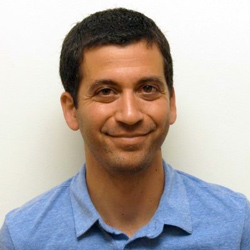
Shai Pilosof - James S. McDonnell Foundation for Complex Systems Postdoctoral Scholar, University of Chicago
Talk Abstract:
Populations of the human malaria parasite, Plasmodium falciparum, comprise huge genetic diversity of relevance to recognition by the immune system. The population structure of the parasite in genetic, antigenic and temporal dimensions remains an important current question with foreseeable applications for malaria epidemiology. Theory predicts that competition for hosts, mediated by the selection that the immune system imposes on strains, can limit their genetic overlap and structure the parasite population. There is however little evidence for population structure in areas where transmission is endemic and the genetic diversity of the parasite is highly diverse, such as in sub-Saharan Africa. In this talk, I show how we used simulated and empirical networks of genetic similarity between strains to identify signatures of competition between strains, and the role it plays in shaping the genetic structure of the parasite’s population both statically and in time. Our approach is relevant to other dynamic biological systems with frequency-dependent interactions in a highly diverse trait space, and overlapping evolutionary and ecological time scales, such as microbial communities and several pathogen populations.
Speaker Bio:
Shai Pilosof is currently a James S. McDonnell Foundation for Complex Systems postdoctoral scholar at the University of Chicago, in the lab of Mercedes Pascual. He is mostly interested in the application of network theory to ecological systems, specifically in the field of disease ecology.
Live Stream:
Time
Wednesday, October 25, 2017 at 12:00 PM - 1:00 PM
Location
Lower Level, Chambers Hall Map
Contact
Calendar
Northwestern Institute on Complex Systems (NICO)
Fall 2026 Classes Begin
University Academic Calendar
All Day
Details
Fall 2026 Classes Begin
Time
Wednesday, September 23, 2026
Contact
Calendar
University Academic Calendar
NICO Reading Group - Fall 2026 First Meeting
Northwestern Institute on Complex Systems (NICO)
6:00 PM
//
Chambers Hall
Details

The NICO Reading Group meets for the first this fall on Wednesday, September 23, 2026. Please contact Jaeseon Ha if you are interested in joining our group.
About:
The NICO Reading Group brings together people across disciplines to read and discuss important ideas in modern AI. We focus on topics such as AI agents, tuning, harnesses, evaluation, AI for scientific discovery, and applications of AI across different fields. The goal is to understand important ideas in AI more deeply by learning and thinking across disciplines.
Leadership:
Jaeseon Ha, a Kellogg MBA + AI student, will lead the reading group during the Fall 2026 term. Please contact Jaeseon with any questions or reach out to us at nico@northwestern.edu.
Meeting Times:
Date: Biweekly on Wednesday evening, starting on September 23, 2026
Time: 6-7pm
Location: NICO main office, Chambers Hall,
600 Foster St, Evanston, IL 60208
Time
Wednesday, September 23, 2026 at 6:00 PM - 7:00 PM
Location
Chambers Hall Map
Contact
Calendar
Northwestern Institute on Complex Systems (NICO)
WED@NICO Seminar Series returns on September 30, 2026
Northwestern Institute on Complex Systems (NICO)
12:00 PM
//
Lower Level, Chambers Hall
Details
The Wednesdays@NICO seminar series returns September 30, 2026, running through November 11, 2026, with the following speakers.
9/30/2026 - Luis Amaral, Northwestern University
10/7/2026 - Kristina Lerman, Indiana University
10/14/2026 - Tim Tangherlini, University of California, Berkeley
10/21/2026 - Andreia Sofia Teixeira, Northeastern University London
10/28/2026 - Rafael Prieto-Curiel, Complexity Science Hub, Vienna
11/4/2026 - Hamsa Bastani, University of Pennsylvania
11/11/2026 - Mayank Agrawal, Proof of Human
We will share detailed speaker information, talk titles and abstracts, in the coming weeks.
Location:
In person: Chambers Hall, 600 Foster Street, Lower Level
Remote option TBA
About the Speaker Series:
Wednesdays@NICO is a vibrant weekly seminar series focusing broadly on the topics of complex systems, networks, and artificial intelligence. It brings together attendees ranging from graduate students to senior faculty who span all of the schools across Northwestern, from applied math to sociology to biology and every discipline in-between. Please visit: https://bit.ly/WedatNICO for information on future speakers.
Time
Wednesday, September 30, 2026 at 12:00 PM - 1:00 PM
Location
Lower Level, Chambers Hall Map
Contact
Calendar
Northwestern Institute on Complex Systems (NICO)